← Forage Calendar mapKnow this look-alike
Death Cap and Destroying Angel: Deadly Amanita Look-alikes
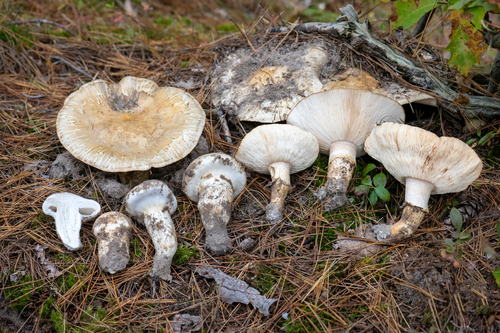
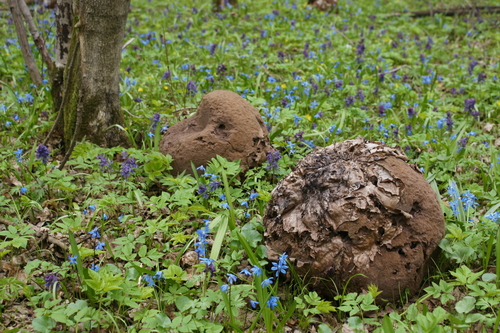
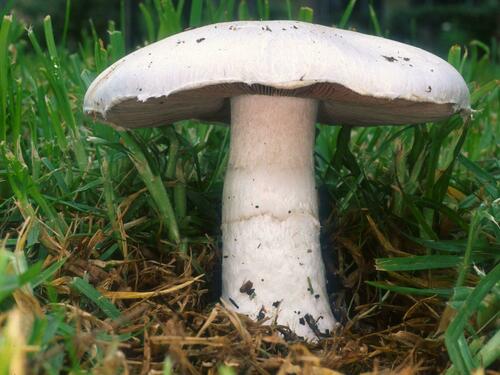
These look-alikes can be deadly. Get the identification right before you eat anything. The deadliest mushrooms in North America are pale, gilled Amanitas that beginners mistake for edible field, meadow, and prince mushrooms, for Caesar's mushroom, for matsutake, and (as buttons) for puffballs. A single death cap can kill. Learn these before you eat any white-gilled or egg-shaped mushroom.
The dangerous species
⚠ do not eatDeath Cap
Amanita phalloides
George Chernilevsky · Public domain
How to tell it apart
- Defining features for this well known species, which is sometimes called the 'death cap,' include the sacklike white volva around its base, the ring, the white gills and spore print, and the non-lined cap margin. — MushroomExpert.com ↗
- Symptoms of death cap mushroom toxicity usually occur 6 to 12 hours after ingestion. — Wikipedia ↗
- The fungus is highly toxic, and is responsible for the majority of fatal mushroom poisonings worldwide. — Wikipedia ↗
⚠ do not eatDestroying Angel
Amanita bisporigera / A. ocreata / A. verna / A. virosa
Louis · CC0
How to tell it apart
- Like other members of the species group it features stark white colors and a prominent sack around the base of the stem, along with a bald cap that almost always lacks patches or warts. — MushroomExpert.com ↗
- A. bisporigera is considered the most toxic North American Amanita mushroom, with little variation in toxin content between different fruit bodies. — Wikipedia ↗
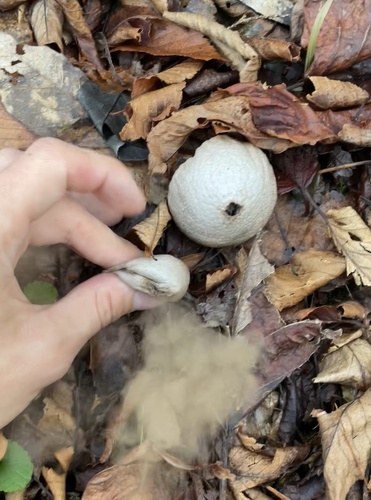
⚠ do not eatAmanita Egg Stage (Death Cap / Destroying Angel button)
Amanita phalloides / A. bisporigera / A. ocreata (immature)
George Chernilevsky · Public domain
How to tell it apart
- Make sure you cut through any puffball from top to bottom to confirm that it is pure white inside, like a marshmallow, with no sign of a cap or stem. — Missouri Department of Conservation ↗
- Young puffballs in the edible stage, before maturation of the gleba, have undifferentiated white flesh within, whereas the gills of immature Amanita mushrooms can be seen if they are closely examined. — Wikipedia ↗
⚠ do not eatFly Agaric
Amanita muscaria
Holger Krisp · CC BY 3.0
How to tell it apart
- It is a distinctive, large white-gilled mushroom typically featuring a bright red cap covered with white warts. — Wikipedia ↗
- Eating dried Fly Agarics can cause a range of symptoms ranging from drowsiness, nausea and sweating to distorted sight and sounds, euphoria and dizziness. — First Nature ↗
⚠ do not eatYellow-Staining Mushroom
Agaricus xanthodermus
andy71 · CC0
How to tell it apart
- When cut the stem flesh quickly turns from white to chrome yellow, most markedly at the stem base. — First Nature ↗
- The Yellow Stainer gives off a noticeable odour of ink, phenol or iodine, especially when the flesh is bruised or cut. — First Nature ↗
- If eaten, the Yellow Stainer can cause stomach cramps, nausea, vomiting, sweating and diarrhoea. — First Nature ↗
Edibles people confuse with these
If you are foraging any of these, rule out the look-alikes above every time.
The notes above are an educational starting point, not a substitute for a field guide or an experienced forager. If you are not completely certain, do not eat it.