← Forage Calendar map
Site data & index
Forage Calendar Data
Every page on the site and the full list of 191 wild edible species we track, with photos and key details. Occurrence and phenology data are compiled from GBIF and iNaturalist and licensed CC BY 4.0; each photo carries its own license.
191 species · 53 ecoregions · 50 states
Keep Forage Calendar free
Hi, I'm Nick. I built Forage Calendar on my own and I keep it free, with no ads. If it has helped you find something good this season, a small tip goes straight into the hosting and the data work. Only if you can spare it. Either way, I'm glad you're here.
All pages
Ecoregion calendars 53
- Alaska
- Arizona and New Mexico Mountains
- Blue Ridge Mountains
- California Coast Ranges and Foothills
- Cascades
- Central Appalachians
- Central California Valley
- Central Great Plains
- Chihuahuan Desert
- Colorado Plateau
- Columbia Plateau
- Corn Belt Midwest
- Eastern Cascades and Blue Mountains
- Great Basin
- Great Lakes and Hudson Lowlands
- Great Lakes Shore
- Gulf Coast Prairies and Marshes
- Hawaii
- High Plains
- Interior Low Plateaus
- Klamath Mountains
- Mid-Atlantic Coastal Plain
- Middle Rockies and Wyoming Basin
- Mississippi Alluvial Plain
- Mojave Desert
- New England Coast and Pine Barrens
- New England Highlands
- Northern and Central Appalachians
- Northern Great Plains
- Northern Lakes and Forests
- Northern Rockies
- Ouachita Mountains
- Ozark Highlands
- Pacific Northwest Coast
- Piedmont
- Piney Woods and Loess Hills
- Sierra Nevada
- Snake River Plain
- Sonoran Desert
- South Florida
- Southeastern Plains
- Southern Appalachians
- Southern California Coast
- Southern California Mountains
- Southern Coastal Plain
- Southern Plains
- Southern Rockies
- Southwestern Tablelands
- Texas Blackland Prairies and Post Oak Savanna
- Texas Hill Country
- Upper Midwest Hardwood Forests
- Wasatch and Uinta Mountains
- Willamette Valley
State calendars 50
- Alabama
- Alaska
- Arizona
- Arkansas
- California
- Colorado
- Connecticut
- Delaware
- Florida
- Georgia
- Hawaii
- Idaho
- Illinois
- Indiana
- Iowa
- Kansas
- Kentucky
- Louisiana
- Maine
- Maryland
- Massachusetts
- Michigan
- Minnesota
- Mississippi
- Missouri
- Montana
- Nebraska
- Nevada
- New Hampshire
- New Jersey
- New Mexico
- New York
- North Carolina
- North Dakota
- Ohio
- Oklahoma
- Oregon
- Pennsylvania
- Rhode Island
- South Carolina
- South Dakota
- Tennessee
- Texas
- Utah
- Vermont
- Virginia
- Washington
- West Virginia
- Wisconsin
- Wyoming
All species 191
| Photo | Species | Category | Difficulty | Notes | Look-alikes |
|---|---|---|---|---|---|
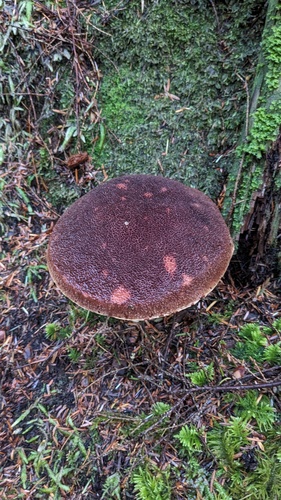 | Admirable BoleteAureoboletus mirabilisAureoboletus mirabilis is found in coniferous forests along the Pacific Coast of North America, and in Asia.iNat ↗GBIF ↗Shaan Aroeste · CC BY | Mushrooms | easy | none | none |
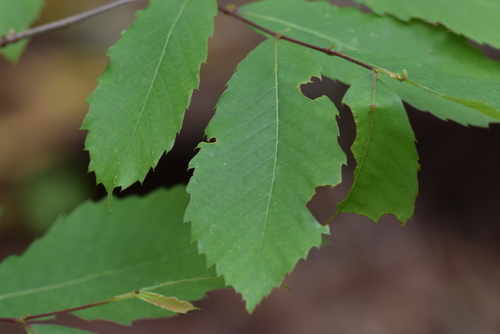 | Allegheny ChinquapinCastanea pumilaDry sandy ridges and rich hillsides where it forms thickets, also in woods and on the borders of swamps.iNat ↗GBIF ↗Blake Bringhurst · CC BY | Nuts | moderate | none |
|
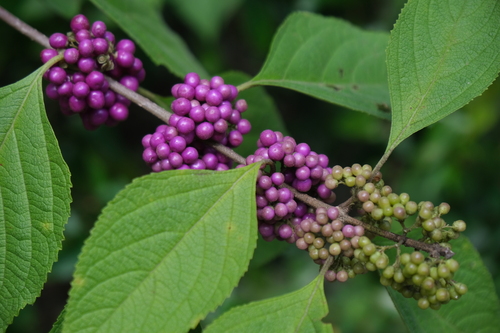 | American BeautyberryCallicarpa americanaRich woods and thickets.iNat ↗GBIF ↗Alex Abair · CC BY | Berries | easy | none | none |
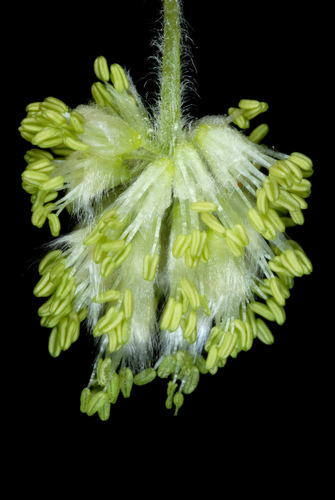 | American BeechFagus grandifoliaRich uplands and mountain slopes, often forming nearly pure forests. In the south of its range it is also found on the margins of streams and swamps.iNat ↗GBIF ↗Douglas Goldman · CC BY-SA | Nuts | easy | none | none |
 | American BrooklimeVeronica americanaShallow water, rills and swamps.iNat ↗GBIF ↗Alex Abair · CC BY | Wild Greens | easy | none | none |
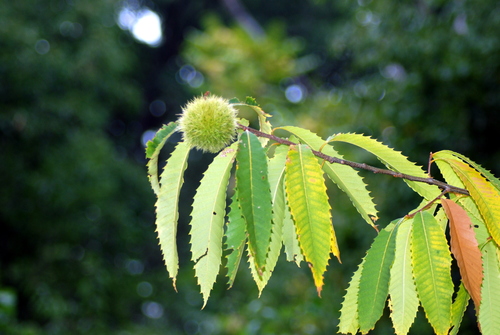 | American ChestnutCastanea dentataDry, gravelly or rocky, mostly acid soils. This species is virtually extinct in America due to chestnut blight.iNat ↗GBIF ↗Bob MacInnes · CC BY | Nuts | moderate | none |
|
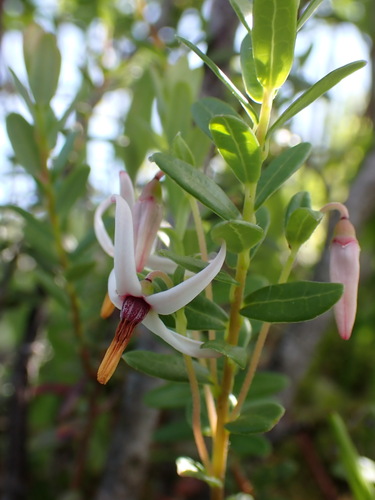 | American CranberryVaccinium macrocarponAcid boggy ground.iNat ↗GBIF ↗Taro Ietaka · CC BY | Berries | expert | none |
|
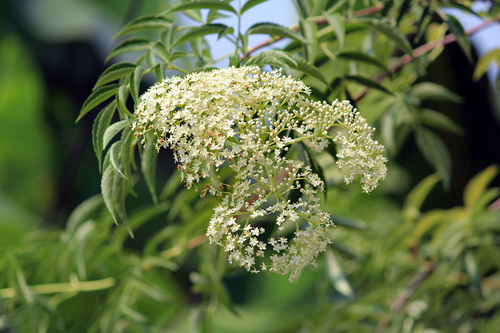 | American ElderberrySambucus canadensisS. canadensis is primarily found in habitat types such as marshes, swamps, and open woodland floodplains, among others.iNat ↗GBIF ↗Rison Thumboor · CC BY-SA | Berries | expert | ⚠ process |
|
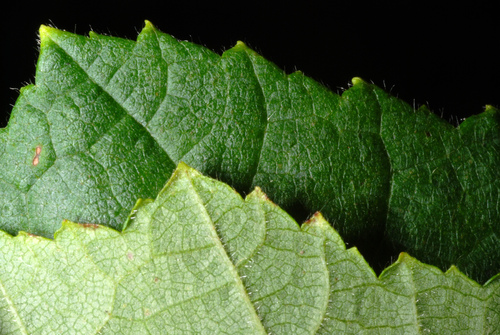 | American HazelnutCorylus americanaThickets and rich woods. Moist to dry open woods and thickets, hillsides, roadsides, fencerows, and waste place from sea level to 750 metres.iNat ↗GBIF ↗Douglas Goldman · CC BY-SA | Nuts | easy | none | none |
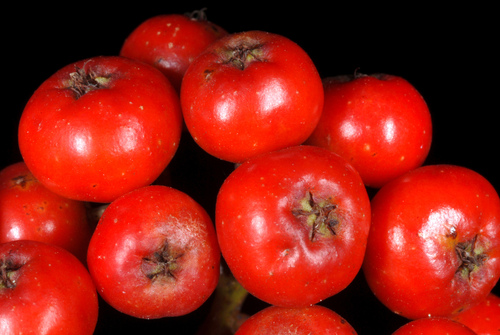 | American Mountain AshSorbus americanaWoods, borders of swamps and rocky hillsides at higher elevations.iNat ↗GBIF ↗Douglas Goldman · CC BY-SA | Berries | moderate | ⚠ process |
|
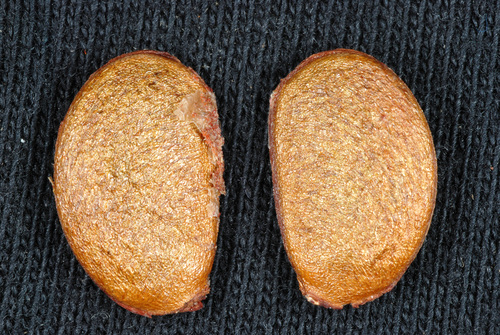 | American PersimmonDiospyros virginianaDry woods, old fields and clearings, on light well-drained sandy soils. Found on most soil types from sands to shales and mud bottomlands.iNat ↗GBIF ↗Douglas Goldman · CC BY-SA | Fruits | easy | ⚠ process | none |
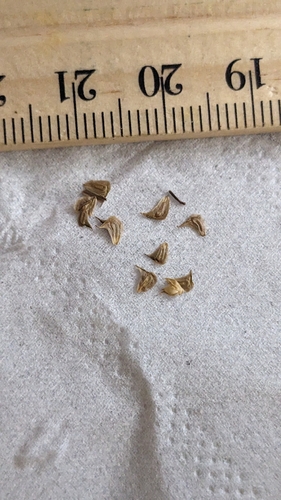 | ArrowheadSagittaria latifoliaIt can be found in wet areas such as ponds and swamps.iNat ↗GBIF ↗Nonbinary-Naturalist · CC0 | Wild Greens | moderate | none |
|
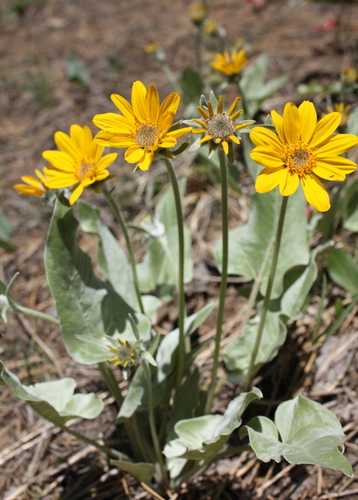 | Arrowleaf BalsamrootBalsamorhiza sagittataAlso sometimes called Oregon sunflower or Okanagan Sunflower, it is widespread across western Canada and much of the western United States.iNat ↗GBIF ↗Leslie Seaton · CC BY | Wild Greens | easy | none | none |
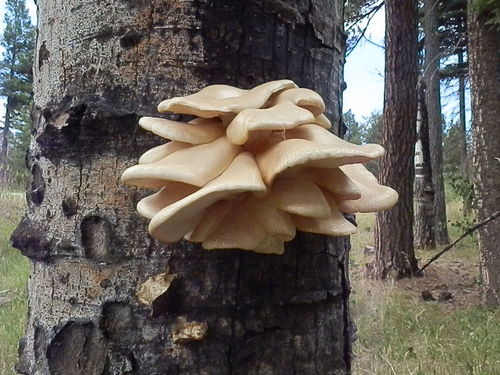 | Aspen Oyster MushroomPleurotus populinusIt is found on dead wood of aspen and cottonwood trees (genus Populus).iNat ↗GBIF ↗pinonbistro · CC BY-SA | Mushrooms | expert | none |
|
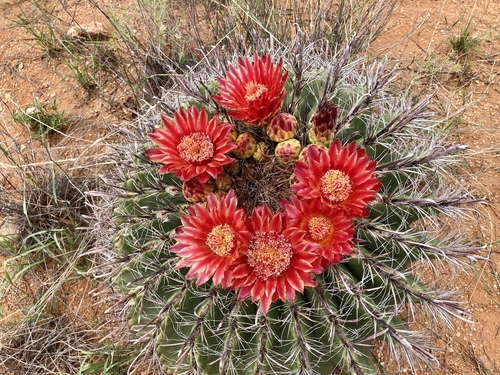 | Barrel Cactus FruitFerocactus spp.The typical habitat is hot and very arid, and the plants have adapted to exploit water movement to concentrate their biomass in areas where water is likely to be present.iNat ↗GBIF ↗CK2AZ · CC BY | Fruits | easy | genus-level | none |
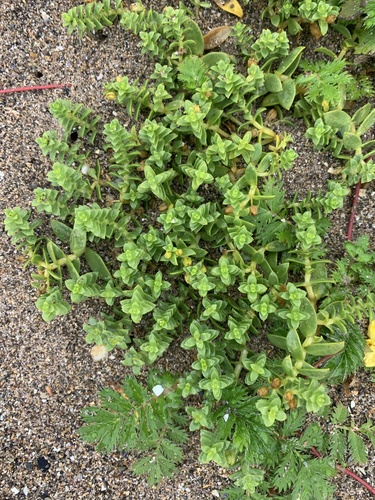 | Beach GreensHonckenya peploidesBy sea coasts on mobile sand and sandy shingle.iNat ↗GBIF ↗Martin Genner · CC0 | Wild Greens | easy | none | none |
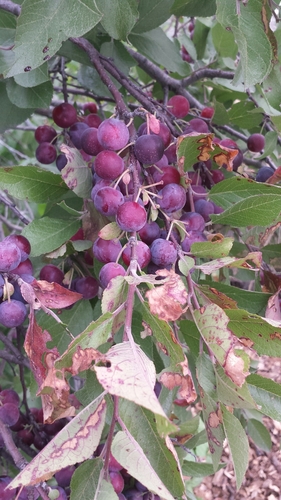 | Beach PlumPrunus maritimaThe species can be found from Maine south to Maryland.iNat ↗GBIF ↗Tom Norton · CC BY | Berries | moderate | ⚠ process |
|
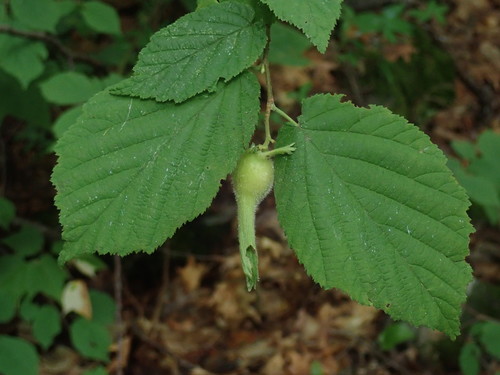 | Beaked HazelnutCorylus cornutaDry or moist woodland on hills or mountain slopes. Rich thickets, clearings and woodland edges.iNat ↗GBIF ↗Lynn Harper · CC0 | Nuts | easy | none | none |
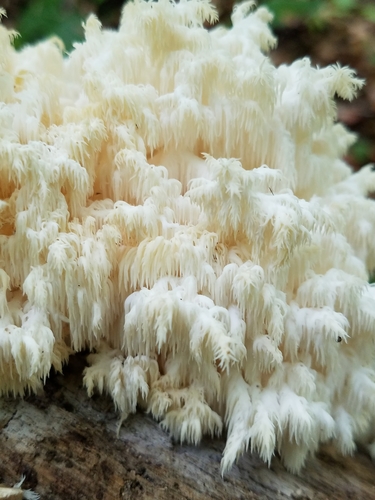 | Bear's Head ToothHericium americanumIt grows exceptionally well in the environment of temperate deciduous forests.iNat ↗GBIF ↗Jennifer Harris · CC BY | Mushrooms | easy | none | none |
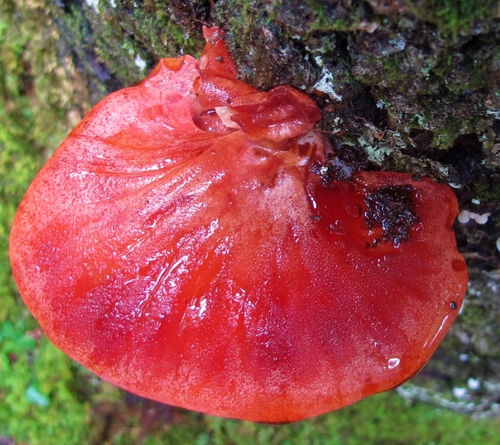 | Beefsteak MushroomFistulina hepaticaIt is fairly common, and can often be found on oaks and sweet chestnut, from August to the end of autumn, on either living or dead wood.iNat ↗GBIF ↗mycowalt · CC BY-SA | Mushrooms | easy | none | none |
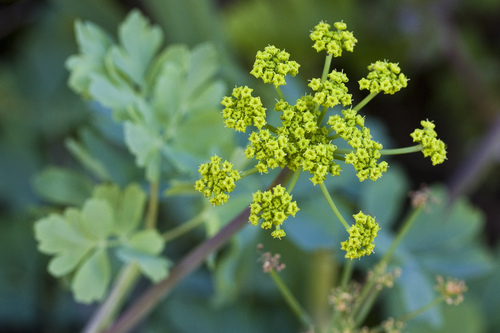 | BiscuitrootLomatium spp.Open slopes and flat land up to moderate elevations.iNat ↗GBIF ↗Ken-ichi Ueda · CC BY | Wild Greens | expert | genus-level |
|
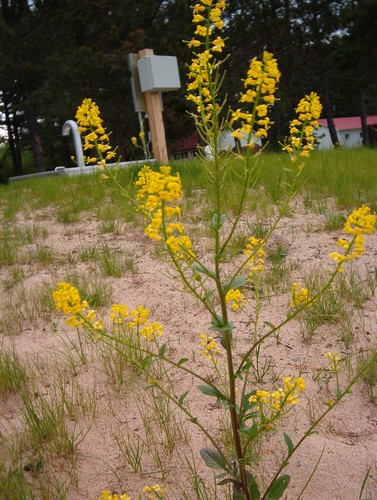 | Black MustardMutarda nigraThe spread of black mustard can increase the frequency of fires in chaparral and coastal sage scrub, changing these habitats to annual grassland.iNat ↗GBIF ↗Fungus Guy · CC BY-SA | Wild Greens | easy | invasive | none |
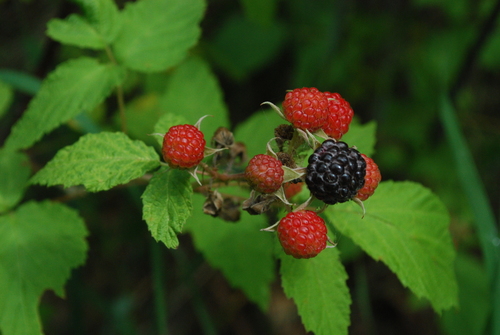 | Black RaspberryRubus occidentalisIt grows in disturbed areas, especially those that are logged or cut.iNat ↗GBIF ↗Joshua Mayer · CC BY-SA | Berries | easy | none |
|
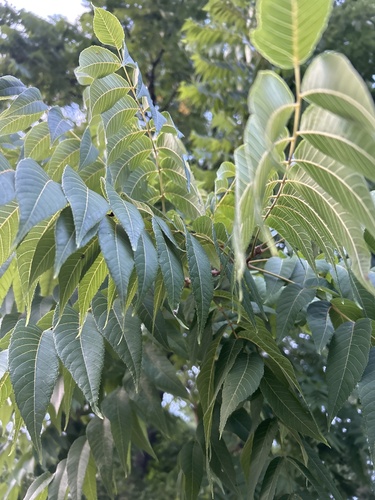 | Black WalnutJuglans nigraRich fertile woods and hillsides in deep well-drained soils.iNat ↗GBIF ↗SalamiRaptor · CC BY-SA | Nuts | easy | ⚠ process | none |
| Blue ElderberrySambucus nigraThis species grows at elevations below 3,000 m (9,800 ft), in diverse habitats of mountains and hills, valleys, riparian zones, open places in woodlands and forests, and exposed slopes where moisture is reachable.iNat ↗GBIF ↗Rison Thumboor · CC BY-SA | Berries | expert | ⚠ process |
|
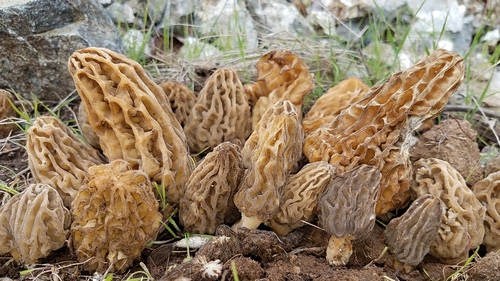 | Blushing MorelMorchella rufobrunneaM. rufobrunnea grows in disturbed soil or in woodchips used in landscaping as a saprotroph.iNat ↗GBIF ↗Alan Rockefeller · CC BY | Mushrooms | expert | ⚠ process |
|
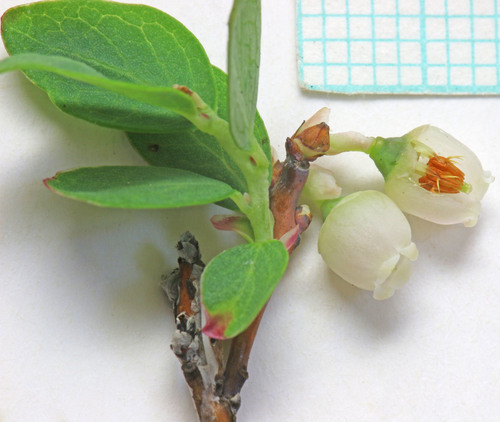 | Bog BilberryVaccinium uliginosumThe plant is native to cool temperate regions of the Northern Hemisphere, at low altitudes in the Arctic, Baltics, and at high altitudes south to the Pyrenees, the Alps, and the Caucasus in Europe, the mountains of Mongolia, northern China, the Korean Peninsula and central Japan in Asia, and the Sierra Nevada in California and the Rocky Mountains in Utah in North America.iNat ↗GBIF ↗Andrey Zharkikh · CC BY | Berries | expert | none |
|
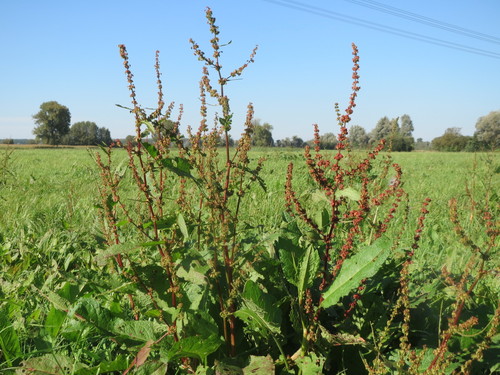 | Broadleaf DockRumex obtusifoliusWaste ground, hedgerows and field margins.iNat ↗GBIF ↗Andreas Rockstein · CC BY-SA | Wild Greens | easy | none | none |
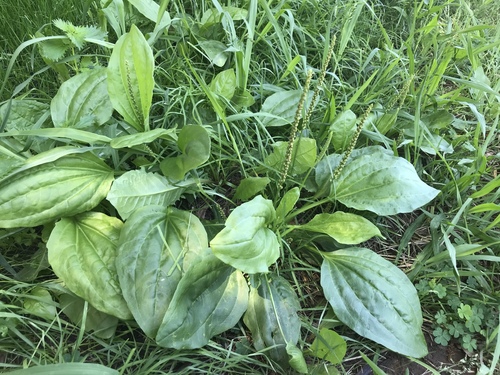 | Broadleaf PlantainPlantago majorA common garden weed, particularly in lawns.iNat ↗GBIF ↗lemonsnapp · CC BY | Wild Greens | easy | none | none |
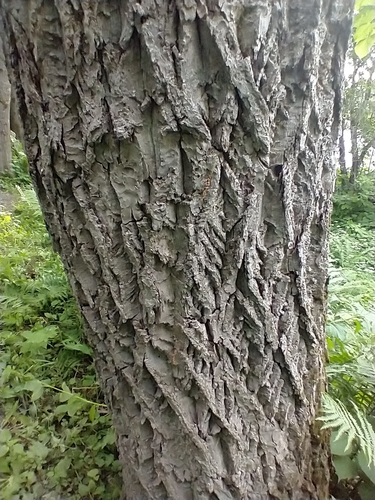 | Butternut / White WalnutJuglans cinereaUsually found in rich moist soils of woods and river terraces, but it also grows on dry rocky soils, especially if these are on limestone..iNat ↗GBIF ↗Tom Norton · CC BY | Nuts | easy | ⚠ processprotected | none |
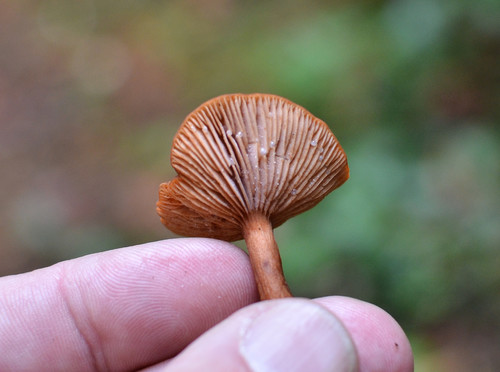 | Candy CapLactarius rubidusNear the West Coast of North America, candy caps can be found from December through March.iNat ↗GBIF ↗dloarie · CC BY | Mushrooms | moderate | none |
|
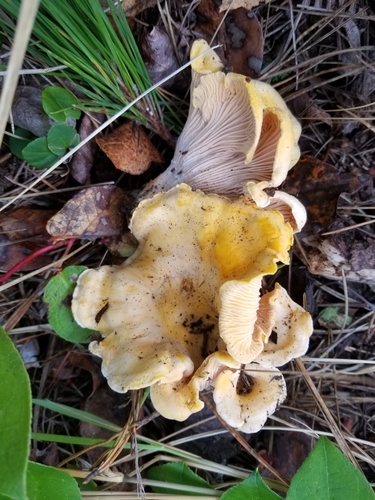 | Cascade ChanterelleCantharellus cascadensisCantharellus cascadensis, commonly known as the cascade chanterelle or hybrid chanterelle, is a fungus native to the Pacific Northwest region of North America.iNat ↗GBIF ↗Jonathan Curley · CC BY | Mushrooms | easy | none |
|
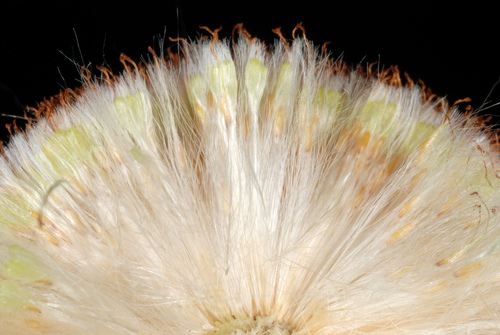 | CattailTypha latifoliaShallow water up to 15cm deep in ponds, lakes, ditches, slow-flowing streams etc, succeeding in acid or alkaline conditions.iNat ↗GBIF ↗Douglas Goldman · CC BY-SA | Wild Greens | moderate | none |
|
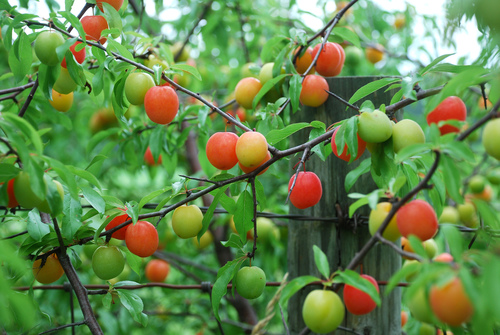 | Chickasaw PlumPrunus angustifoliaUsually found in sandy soils, occurring along fence rows, in pastures, fields, stream banks, sand dunes and disturbed sites, often forming thickets.iNat ↗GBIF ↗Douglas Goldman · CC BY-SA | Fruits | moderate | none |
|
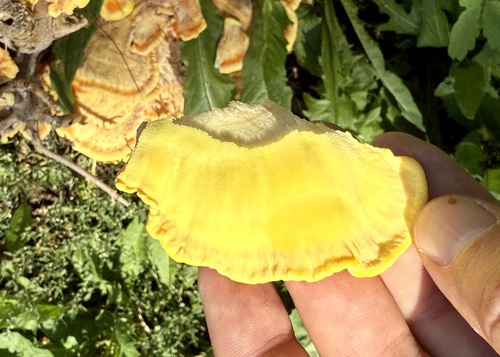 | Chicken of the WoodsLaetiporus sulphureusIt grows on dead or mature hardwoods and has been reported from a very wide variety of host trees, such as Quercus, Prunus, Pyrus, Populus, Salix, Robinia, and Fagus, occasionally also from conifers, from August to October or later, sometimes as early as June.iNat ↗GBIF ↗Dr. Alexey Yakovlev · CC BY | Mushrooms | easy | ⚠ process | none |
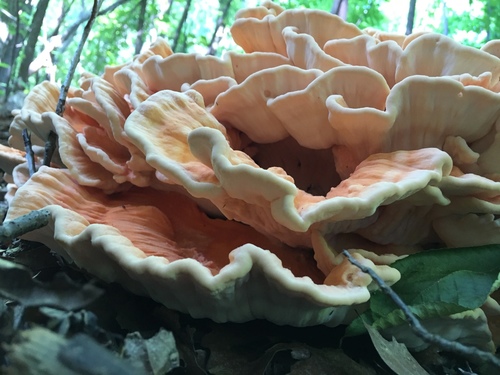 | Chicken of the Woods (root-growing)Laetiporus cincinnatusThe sulphur shelf mushroom is most commonly found on wounds of trees, mostly oak, though it is also frequently found on eucalyptus, yew, sweet chestnut, and willow, as well as conifers in some species.iNat ↗GBIF ↗Sean Bloom · CC BY | Mushrooms | easy | ⚠ process | none |
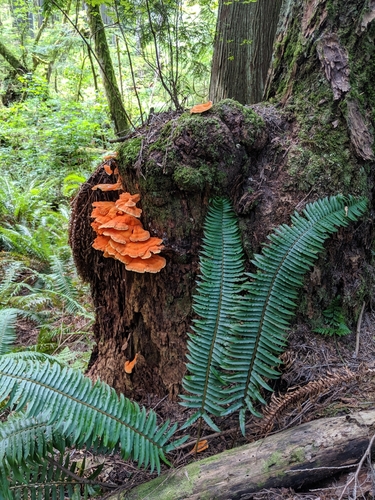 | Chicken of the Woods (western conifer)Laetiporus conifericolaIt is found in western North America ranging from California to Alaska, where it grows as a plant pathogen on conifer trees, particularly fir, spruce, and hemlock.iNat ↗GBIF ↗Sharon Squazzo · CC BY | Mushrooms | easy | ⚠ process | none |
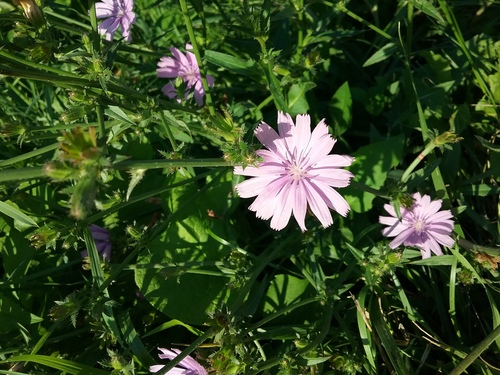 | ChicoryCichorium intybusNative to Europe, North Africa, and western Asia, it has been introduced to the Americas and Australia.iNat ↗GBIF ↗Mary Crickmore · CC0 | Wild Greens | easy | none | none |
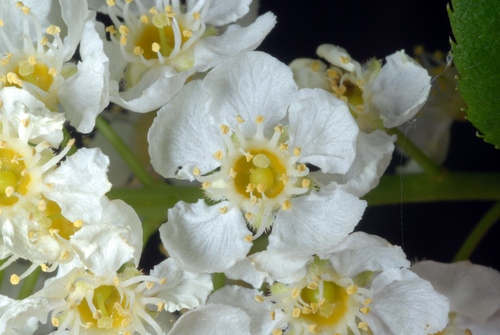 | ChokecherryPrunus virginianaRich, rather moist soils, in thickets, borders of woods and on shores.iNat ↗GBIF ↗Douglas Goldman · CC BY-SA | Berries | moderate | ⚠ process |
|
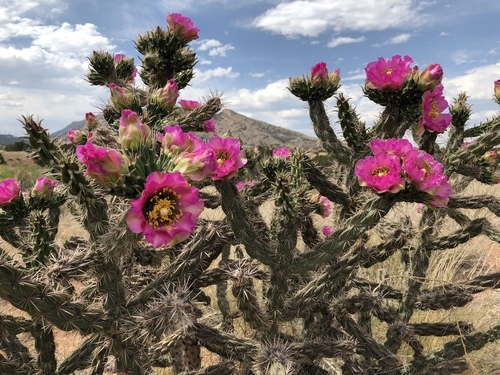 | Cholla BudsCylindropuntia spp.Roughly 35 species of Cylindropuntia are native to the southwestern and south-central United States, Mexico, and the West Indies.iNat ↗GBIF ↗Owen McElroy · CC0 | Fruits | easy | ⚠ processgenus-level | none |
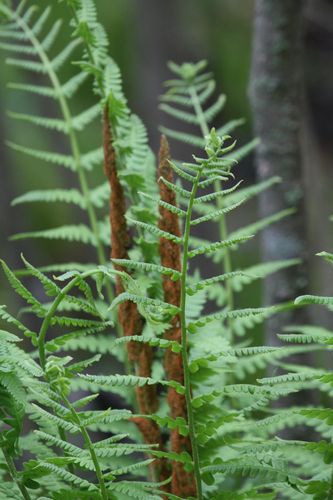 | Cinnamon Fern FiddleheadOsmundastrum cinnamomeumThe cinnamon fern mainly inhabits swamps, bogs and moist woodlands.iNat ↗GBIF ↗Michael Newlon · CC BY | Wild Greens | moderate | ⚠ process |
|
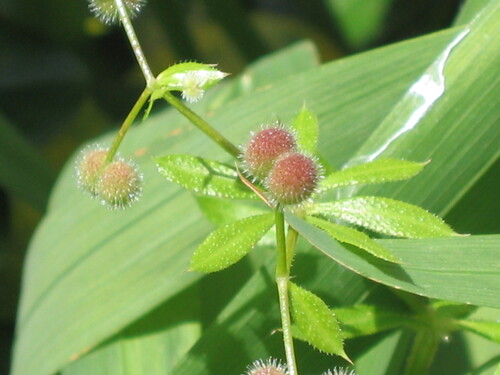 | CleaversGalium aparineMoist and grassy places on most types of soil.iNat ↗GBIF ↗zebedeugalinha · CC BY | Wild Greens | easy | none | none |
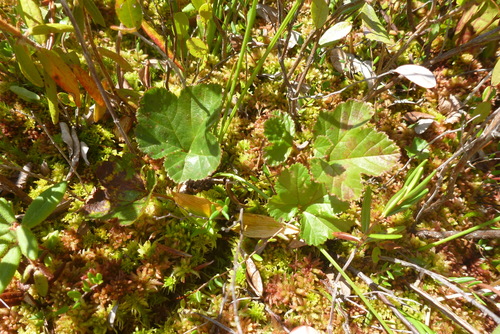 | CloudberryRubus chamaemorusCloudberries are a circumpolar boreal plant, occurring naturally throughout the Northern Hemisphere from 78°N, south to about 55°N, and are scattered south to 44°N mainly in mountainous areas and moorlands.iNat ↗GBIF ↗Norma Malinowski · CC BY | Berries | easy | none | none |
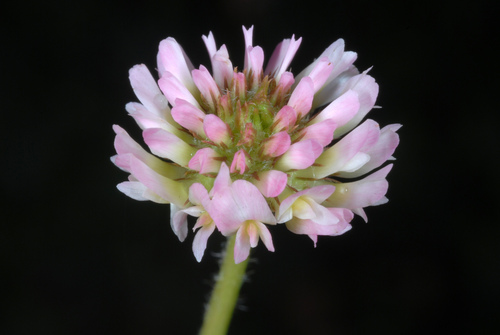 | CloverTrifolium spp.Originating in Europe, the genus has a cosmopolitan distribution.iNat ↗Douglas Goldman · CC BY-SA | Wild Greens | easy | genus-level | none |
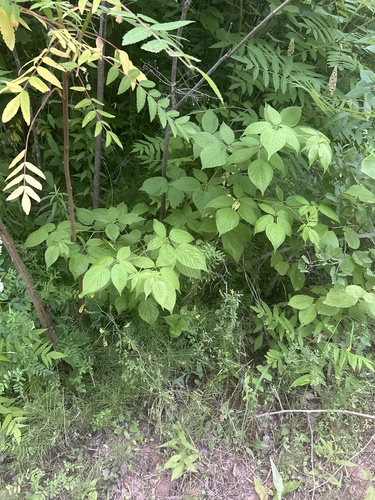 | Common BlackberryRubus allegheniensisDry thickets, clearings and woodland margins. The species is very common throughout forests in eastern and central North America. It is shade intolerant.iNat ↗GBIF ↗Jonny Tostenson · CC0 | Berries | easy | none |
|
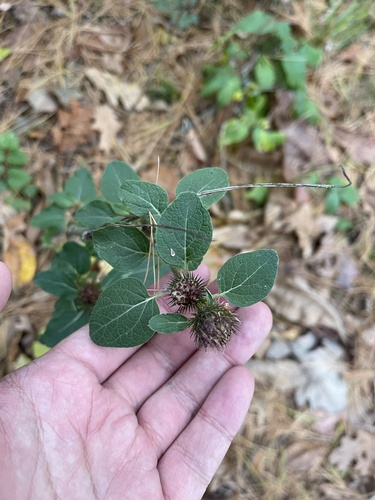 | Common BurdockArctium minusThe plant is native to Europe, but has become introduced elsewhere such as Australia, North and South America, and other places.iNat ↗GBIF ↗Brandon Corder · CC BY | Wild Greens | easy | none | none |
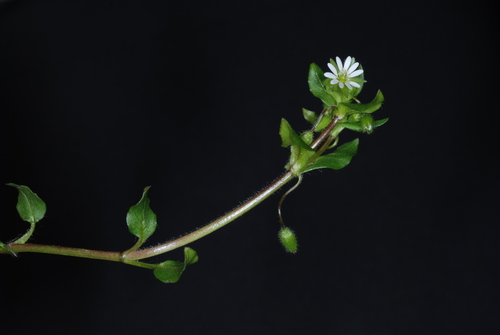 | Common ChickweedStellaria mediaGrowing almost anywhere, it is a common garden weed.iNat ↗GBIF ↗Douglas Goldman · CC BY-SA | Wild Greens | easy | none | none |
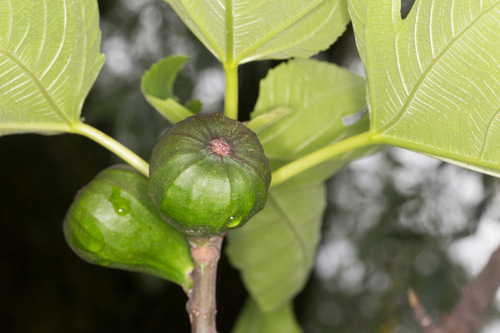 | Common FigFicus caricaAmongst rocks, in woods and scrub on hot dry soils.iNat ↗GBIF ↗Drepanostoma · CC BY | Fruits | easy | none | none |
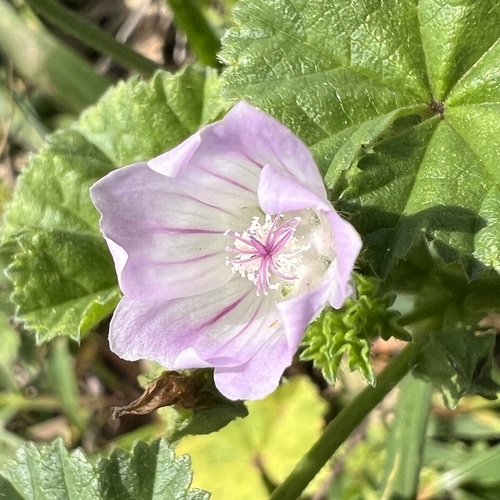 | Common MallowMalva neglectaWaste and cultivated ground, usually on dry soils, frequently in coastal habitats, on dry walls or as a weed of cultivated ground.iNat ↗GBIF ↗Anne Parker · CC BY | Wild Greens | easy | none | none |
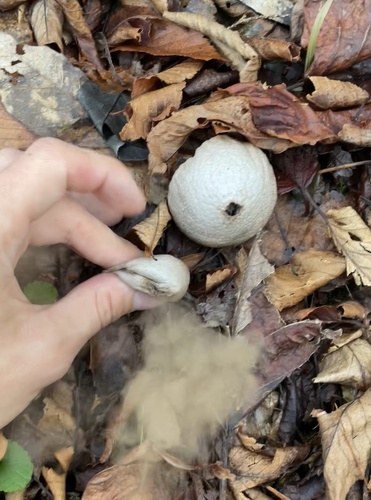 | Common PuffballLycoperdon perlatumA widespread species with a cosmopolitan distribution, the species grows in fields, gardens, and grassy clearings.iNat ↗GBIF ↗Jacob Weston · CC BY | Mushrooms | expert | none |
|
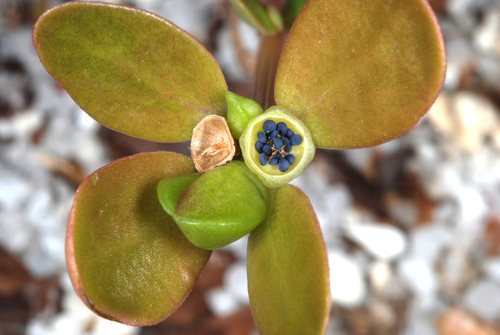 | Common PurslanePortulaca oleraceaFields, waste ground, roadside verges, cultivated ground and by the sea.iNat ↗GBIF ↗Douglas Goldman · CC BY-SA | Wild Greens | moderate | none |
|
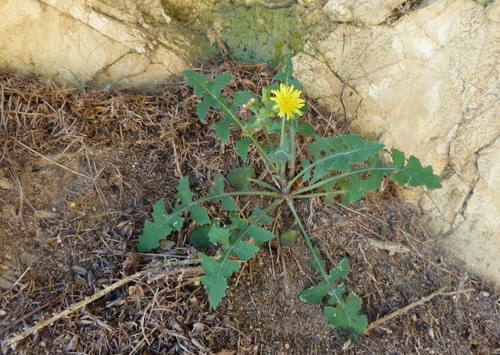 | Common Sow ThistleSonchus oleraceusWaysides, waste and cultivated ground.iNat ↗GBIF ↗Colin Meurk · CC BY-SA | Wild Greens | easy | invasive | none |
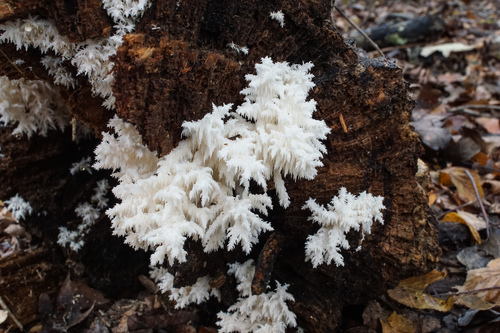 | Coral Tooth MushroomHericium coralloidesIt is found throughout North America, Eurasia and Australia, growing on dead hardwood trees.iNat ↗GBIF ↗Bill Sheehan · CC BY-SA | Mushrooms | easy | none | none |
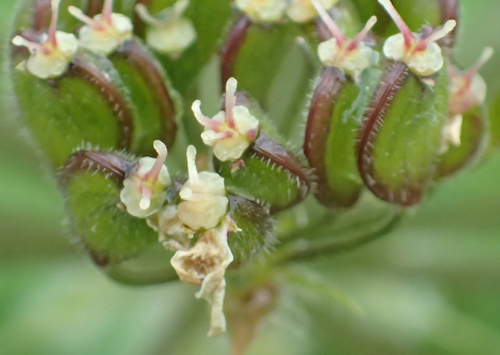 | Cow ParsnipHeracleum maximumHeracleum maximum, commonly known as cow parsnip, is the only member of the genus Heracleum native to North America.iNat ↗GBIF ↗Connie Taylor · CC BY | Wild Greens | expert | ⚠ process |
|
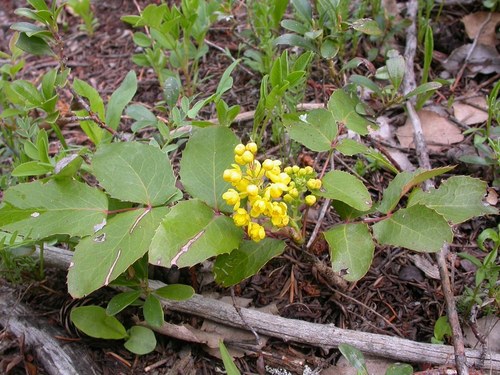 | Creeping Oregon GrapeBerberis repensAs a species it is well adapted to fire and is a very common understory plant in western forests.iNat ↗GBIF ↗Matt Lavin · CC BY-SA | Berries | easy | ⚠ process |
|
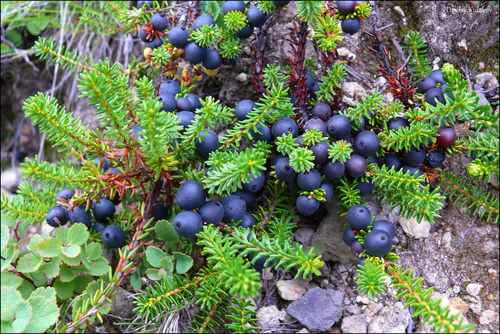 | CrowberryEmpetrum nigrumEmpetrum nigrum grows in bogs and other acidic soils in shady, moist areas; it also grows in subalpine and alpine habitats in the Pacific Northwest.iNat ↗GBIF ↗Dmitry Kulakov · CC BY | Berries | expert | none |
|
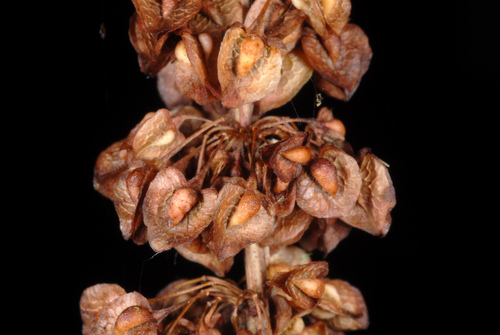 | Curly DockRumex crispusGrowing almost anywhere, it is found especially in grassy places, waste ground, roadsides and near sand dunes and is a serious weed of agriculture.iNat ↗GBIF ↗Douglas Goldman · CC BY-SA | Wild Greens | easy | invasive | none |
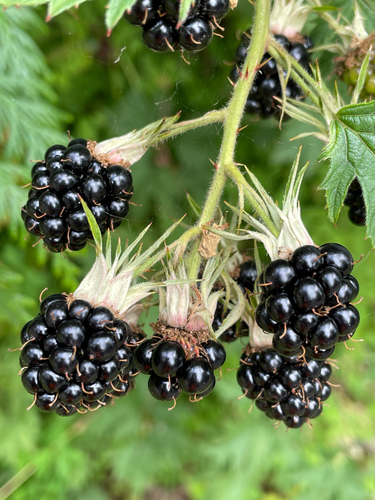 | Cutleaf BlackberryRubus laciniatusIt is an introduced species in Australia and North America, and has become a weed and invasive species in forested habitats in the United States and Canada, particularly in the Northeast and along the Pacific Coast, as well as in Australia.iNat ↗GBIF ↗Tom Erler · CC0 | Berries | easy | invasive | none |
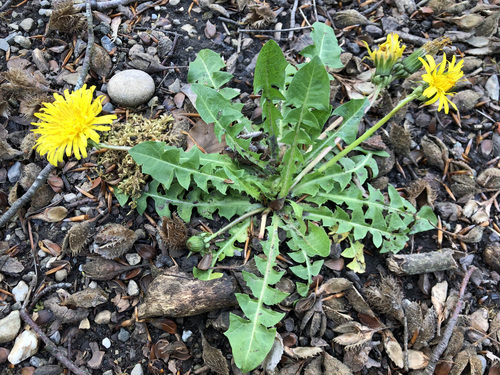 | DandelionTaraxacum officinaleA very common weed of grassland and cultivated ground.iNat ↗GBIF ↗Jason Grant · CC BY | Wild Greens | easy | none | none |
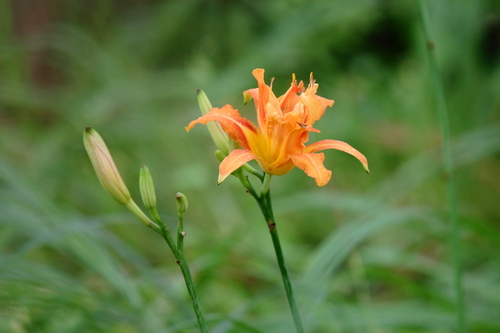 | Day LilyHemerocallis fulvaIt is very widely grown as an ornamental plant in temperate climates for its showy flowers and ease of cultivation.iNat ↗GBIF ↗harum.koh · CC BY-SA | Wild Greens | moderate | ⚠ process |
|
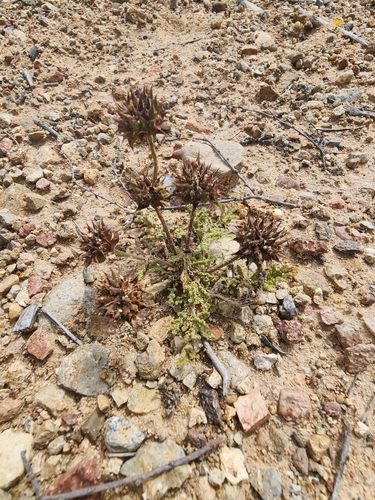 | Desert ChiaSalvia columbariaeSalvia columbariae can be found in dry undisturbed sites, chaparral, and coastal sage scrub.iNat ↗GBIF ↗Trevor Harding · CC BY | Wild Greens | easy | none | none |
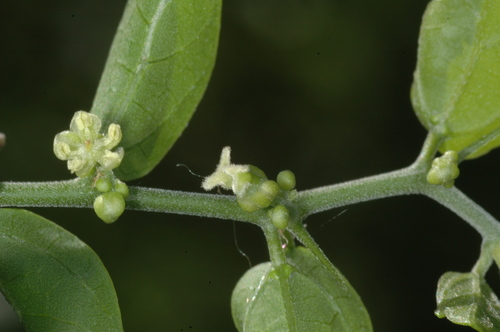 | Desert HackberryCeltis pallidaIn deserts, canyons, mesas, washes, foothills, thickets, brushland, and grassland near gravelly or well-drained sandy soil at elevations of 1000 - 1300 metres.iNat ↗GBIF ↗aacocucci · CC BY | Berries | easy | none | none |
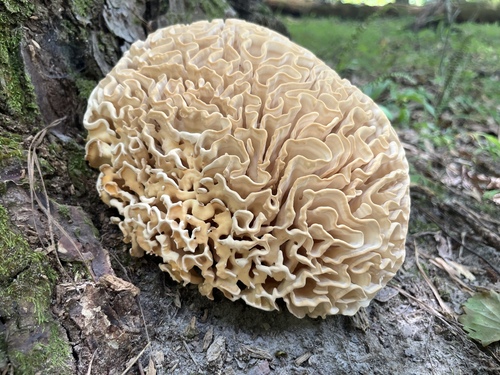 | Eastern Cauliflower MushroomSparassis spathulataSparassis spathulata can be found between eastern Texas and northeastern North America from July to September.iNat ↗GBIF ↗Megan Herrmann · CC BY | Mushrooms | easy | none | none |
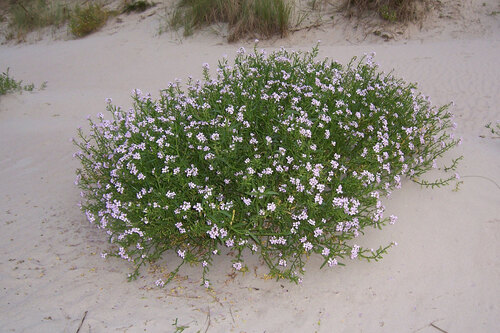 | European Sea RocketCakile maritimaIt is present on the west and east coasts of North America, where it has the potential to become an invasive species.iNat ↗GBIF ↗Jürgen Howaldt · CC BY-SA | Wild Greens | easy | invasive | none |
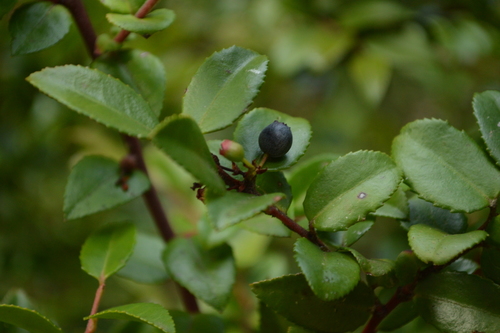 | Evergreen HuckleberryVaccinium ovatumDry slopes and sandy heathy places from near the sea to 800 metres.iNat ↗GBIF ↗David Anderson · CC BY | Berries | expert | none |
|
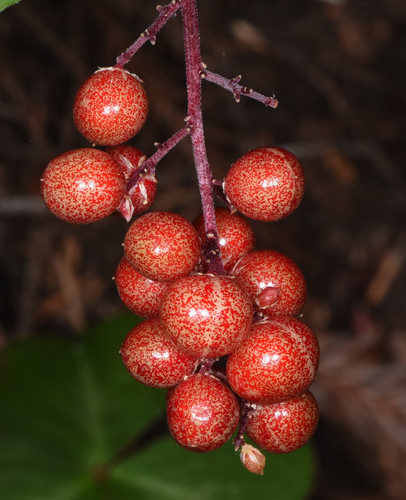 | False Solomon's SealMaianthemum racemosumMoist coniferous and deciduous woods, clearings and bluffs, preferring shaded streamsides.iNat ↗GBIF ↗Don Loarie · CC BY | Wild Greens | expert | none |
|
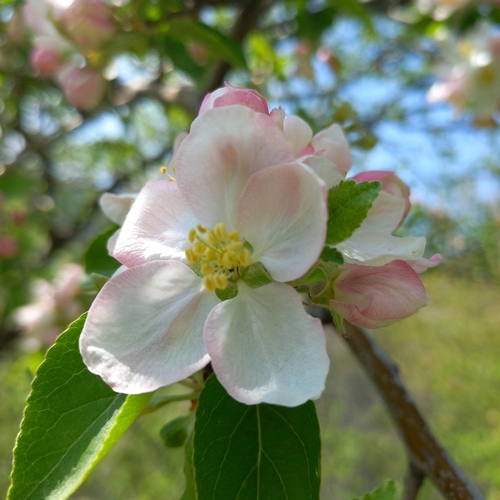 | Feral AppleMalus domesticaApples have been grown for thousands of years in Eurasia before they were introduced to North America by European colonists.iNat ↗GBIF ↗Alexander Dubynin · CC BY | Fruits | easy | none | none |
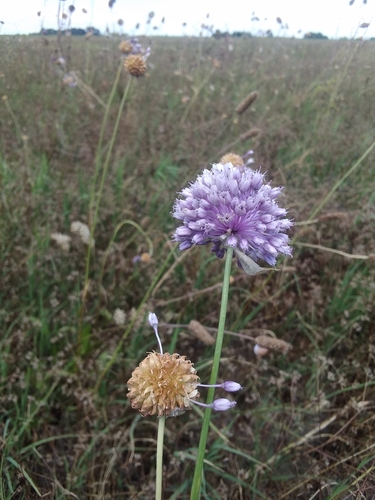 | Field GarlicAllium vinealeThe species was introduced in Australia and North America, where it has become an invasive species.iNat ↗GBIF ↗ÖkopatóPál · CC0 | Wild Greens | expert | invasive |
|
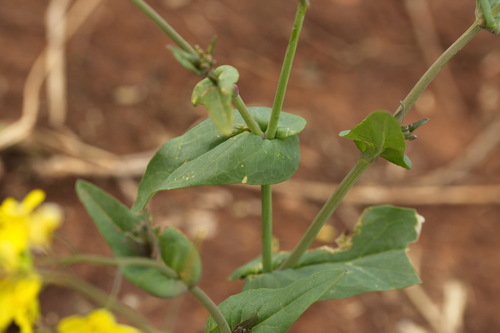 | Field MustardBrassica rapaWild, feral, and cultivated populations are found worldwide, making the species important agriculturally, economically, and ecologically.iNat ↗GBIF ↗Вячеслав Юсупов · CC BY | Wild Greens | easy | invasive | none |
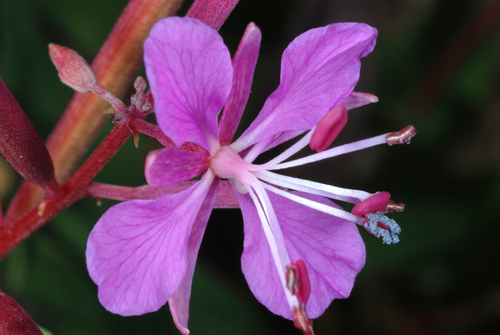 | FireweedChamaenerion angustifoliumFireweed is often abundant in wet calcareous to slightly acidic soils in open fields, pastures, and particularly burned-over lands.iNat ↗GBIF ↗Douglas Goldman · CC BY-SA | Wild Greens | easy | none | none |
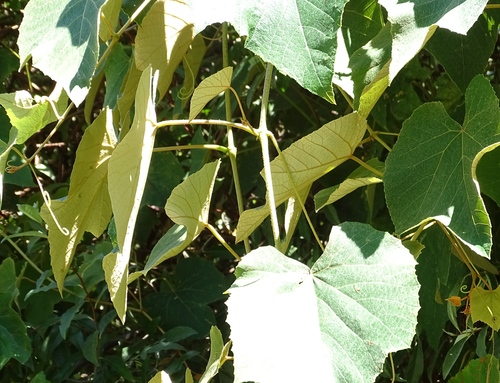 | Fox GrapeVitis labruscaWet or dry thickets and woodland borders.iNat ↗GBIF ↗Sandra Keller · CC BY | Berries | expert | none |
|
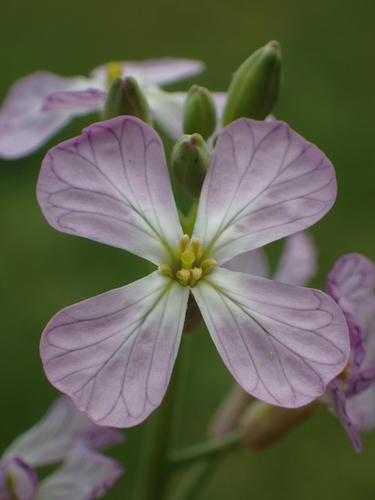 | Garden RadishRaphanus sativusInvasive in disturbed areas, roadsides, agricultural margins, and coastal areas across much of North America; particularly common in California where it dominates some coastal and disturbed habitats.iNat ↗GBIF ↗葉子 · CC0 | Wild Greens | easy | invasive | none |
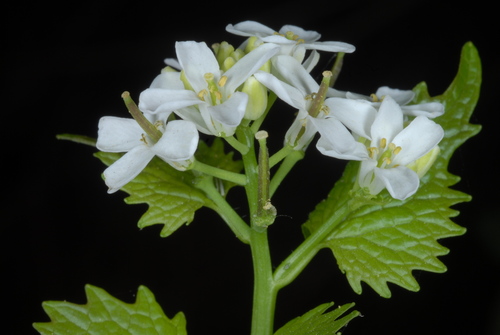 | Garlic MustardAlliaria petiolataIt has now become a tenacious invasive plant across the northern U.S., in particular because of its earlier springtime emergence than many native species, often in the forest understory.iNat ↗GBIF ↗Douglas Goldman · CC BY-SA | Wild Greens | easy | invasive | none |
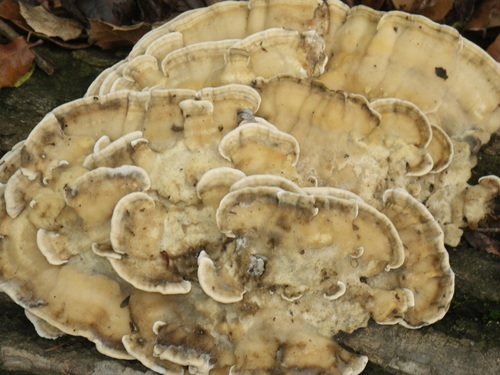 | Giant PolyporeMeripilus sumstineiIt grows in large clumps on the ground around hardwood (including oak) trunks, stumps, and logs.iNat ↗GBIF ↗Dominic · CC BY | Mushrooms | easy | none | none |
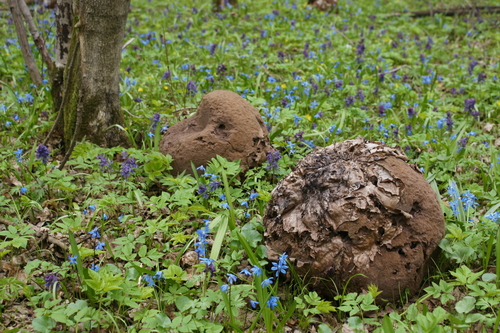 | Giant PuffballCalvatia giganteaCalvatia gigantea, commonly known in English as the giant puffball, is a puffball mushroom found in meadows, fields, and deciduous forests in late summer and autumn.iNat ↗GBIF ↗Yehor Yatsiuk · CC0 | Mushrooms | expert | none |
|
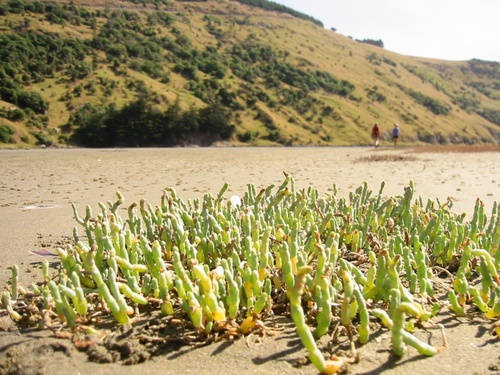 | GlasswortSalicornia spp.Salicornia species are native to North America, Europe, central Asia, and southern Africa.iNat ↗Jon Sullivan · CC BY | Wild Greens | easy | genus-level | none |
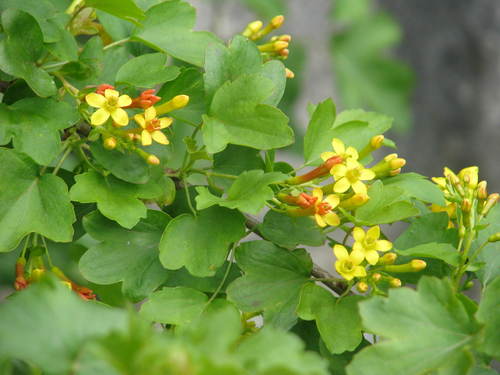 | Golden CurrantRibes aureumIt can be found around gravel banks and plains around flowing water.iNat ↗GBIF ↗peganum · CC BY-SA | Berries | easy | none |
|
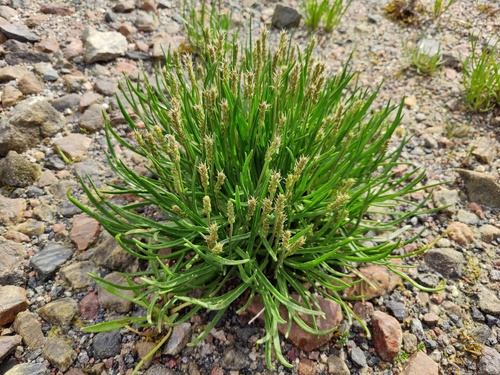 | Goose TonguePlantago maritimaShort turf in salt marshes near the sea and by streams in mountains, usually in saline or wet soils.iNat ↗GBIF ↗Tatiana Gavrilova · CC0 | Wild Greens | easy | none | none |
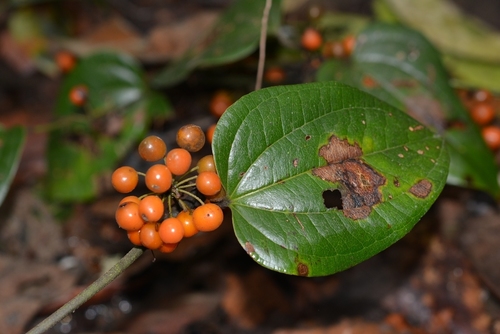 | GreenbrierSmilax spp.29 species are recognized in Central America and the Caribbean, while there are 20 species in North America north of Mexico.iNat ↗Neptalí Ramírez Marcial · CC BY | Wild Greens | easy | genus-level | none |
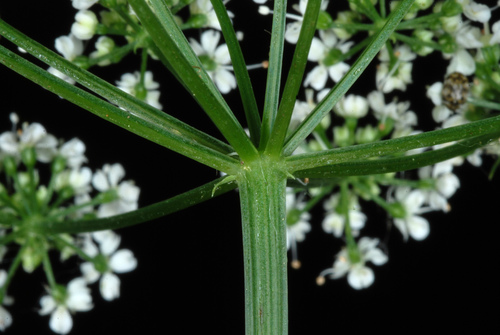 | Ground ElderAegopodium podagrariaIt is native to Europe and Asia, but has been introduced around the world as an ornamental plant, where it occasionally poses an ecological threat as an invasive exotic plant.iNat ↗GBIF ↗Douglas Goldman · CC BY-SA | Wild Greens | expert | invasive |
|
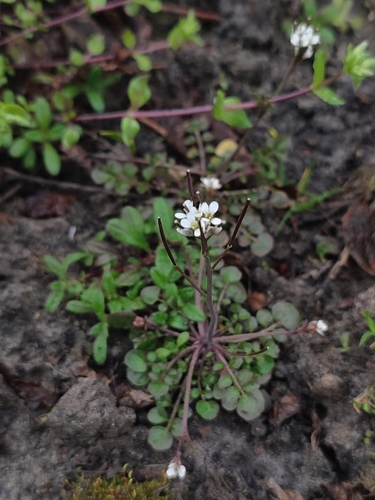 | Hairy BittercressCardamine hirsutaOpen and cultivated ground, rocks, scree, walls etc.iNat ↗GBIF ↗Igor Balashov · CC BY | Wild Greens | easy | none | none |
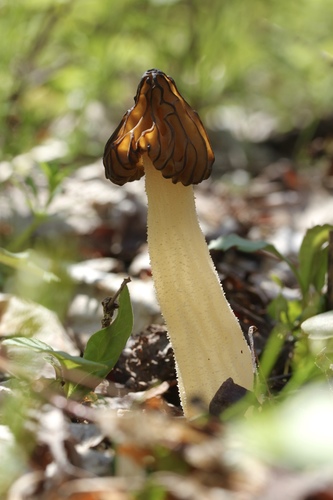 | Half-Free MorelMorchella punctipesThe mushrooms are found in hardwood forests, often where white ash, American elm, and American tulip trees grow.iNat ↗GBIF ↗Fluff Berger · CC BY-SA | Mushrooms | expert | ⚠ process |
|
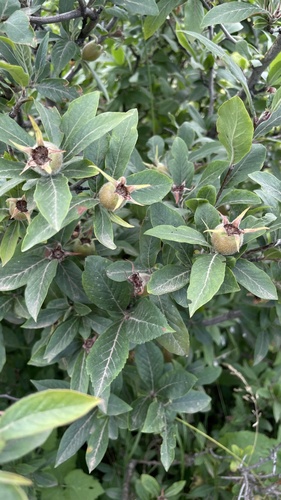 | HawthornCrataegus spp.Banks of streams and steep gorges.iNat ↗GBIF ↗Afanasovich Alexey · CC BY | Berries | easy | genus-level |
|
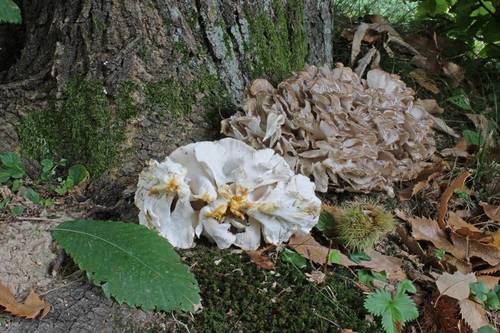 | Hen of the WoodsGrifola frondosaGrifola frondosa, also known as hen-of-the-woods, sheep's head, ram's head, or maitake in Japanese, is a polypore mushroom that grows at the base of trees, particularly old growth oaks or maples.iNat ↗GBIF ↗Davide Puddu · CC BY | Mushrooms | easy | none | none |
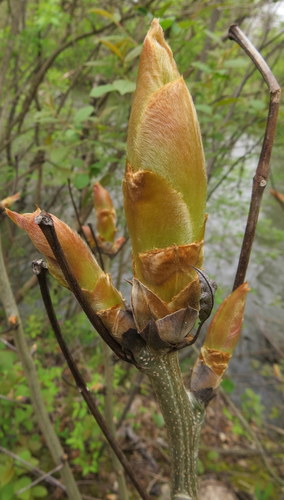 | HickoryCarya spp.Hickories are temperate to subtropical forest trees with pinnately compound leaves and large nuts.iNat ↗GBIF ↗Adam Kranz · CC0 | Nuts | easy | genus-level | none |
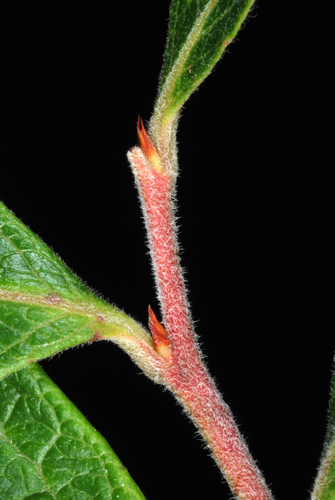 | Highbush BlueberryVaccinium corymbosumSwamps, low wet woods, pine barrens and dry uplands. The plant is found in wooded or open habitats with moist acidic soils.iNat ↗GBIF ↗Douglas Goldman · CC BY-SA | Berries | expert | none |
|
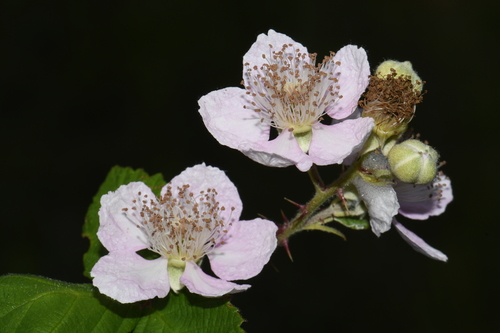 | Himalayan BlackberryRubus armeniacusAbundant in riparian zones, edges of wetlands and other areas that experience occasional flooding, such as irrigation channels, it colonizes disturbed areas such as recently burnt sites, along railway lines, roadsides and fence linesiNat ↗GBIF ↗Brian Finzel · CC BY-SA | Berries | easy | invasive | none |
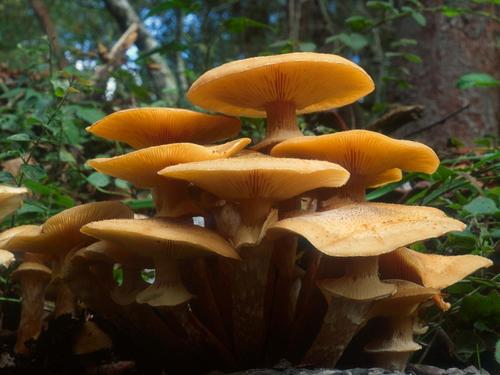 | Honey MushroomArmillaria melleaIt grows parasitically on a large number of broadleaf trees.iNat ↗GBIF ↗Nathan Wilson · CC BY-SA | Mushrooms | expert | ⚠ process |
|
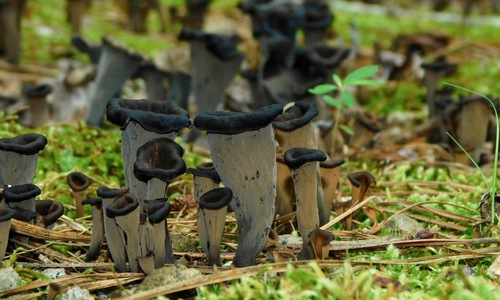 | Horn of PlentyCraterellus fallaxC. fallax is mycorrhizal, forming associations with Tsuga and Quercus species, among others.iNat ↗GBIF ↗Michael J. Papay · CC BY | Mushrooms | easy | none | none |
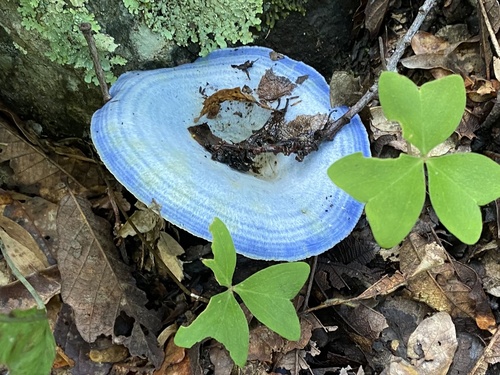 | Indigo Milk CapLactarius indigoL. indigo grows on the ground in both deciduous and coniferous forests, where it forms mycorrhizal associations with a broad range of trees.iNat ↗GBIF ↗Elliott Gordon · CC BY | Mushrooms | easy | none | none |
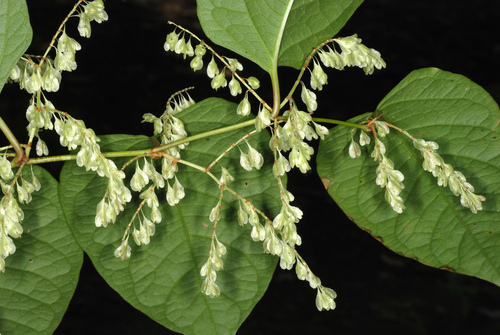 | Japanese KnotweedReynoutria japonicaIn North America and Europe, the species has successfully established itself in numerous habitats; it is classified as a pest and invasive species in several countries.iNat ↗GBIF ↗Douglas Goldman · CC BY-SA | Wild Greens | easy | ⚠ processinvasive | none |
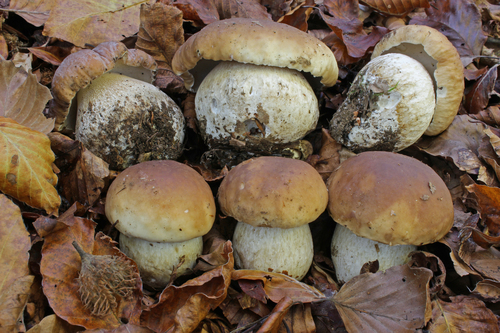 | King BoleteBoletus edulisThe fungus grows in deciduous and coniferous forests and tree plantations, forming symbiotic ectomycorrhizal associations with living trees by enveloping the tree's underground roots with sheaths of fungal tissue.iNat ↗GBIF ↗Davide Puddu · CC BY | Mushrooms | moderate | none |
|
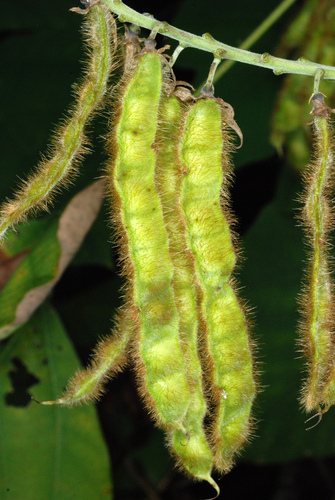 | KudzuPueraria montanaIt is a seasonal climbing plant, growing high where suitable surfaces (trees, cliffs, walls) are available, and also growing as ground cover where there are no vertical surfaces.iNat ↗GBIF ↗Douglas Goldman · CC BY-SA | Wild Greens | easy | invasive | none |
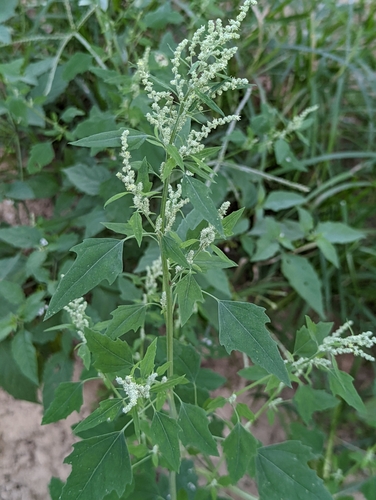 | Lamb's QuartersChenopodium albumThough cultivated in some regions, the plant is elsewhere considered a weed.iNat ↗GBIF ↗Kristi Zoebelein · CC0 | Wild Greens | easy | none | none |
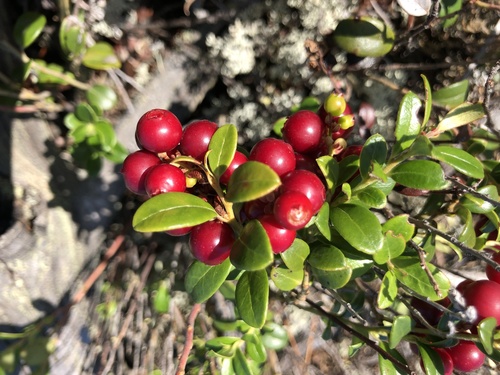 | LingonberryVaccinium vitis-idaeaIt is native to boreal forest and Arctic tundra throughout the Northern Hemisphere.iNat ↗GBIF ↗Valerii Glazunov · CC BY | Berries | expert | none |
|
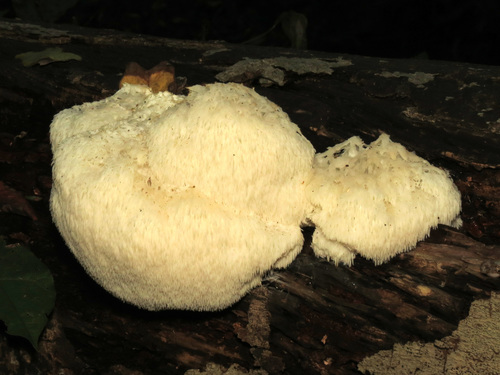 | Lion's ManeHericium erinaceusIn the wild, lion's mane is usually associated with a tree wound and causes a white pocket rot.iNat ↗GBIF ↗Katja Schulz · CC BY | Mushrooms | easy | none | none |
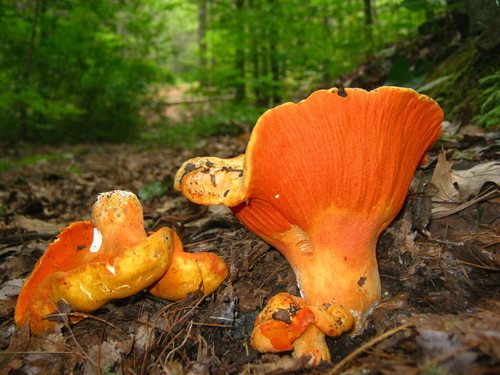 | Lobster MushroomHypomyces lactifluorumHypomyces lactifluorum is found in wooded areas, often near Russula brevipes or Lactarius growing in conifer forests, in particular under ponderosa pine in the American Southwest and the Pacific Northwest.iNat ↗GBIF ↗Erlon Bailey · CC BY-SA | Mushrooms | moderate | none |
|
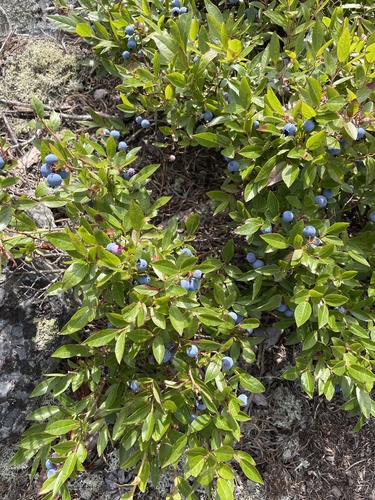 | Lowbush BlueberryVaccinium angustifoliumIn its native habitat the plant grows in open conifer woods, old fields, and sandy or rocky balds.iNat ↗GBIF ↗Kathleen Houlahan Chayer · CC0 | Berries | expert | none |
|
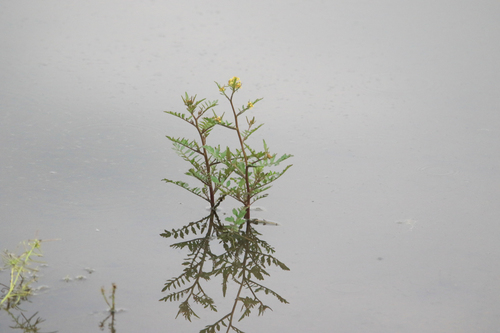 | Marsh Yellow CressRorippa palustrisMoist places, especially where water stands only in the winter.iNat ↗GBIF ↗Нурхайдарова Татьяна · CC BY | Wild Greens | easy | none | none |
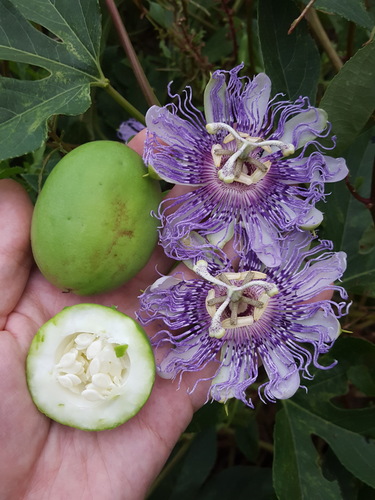 | Maypop / Wild Passion FruitPassiflora incarnataSandy thickets and open soils. Fields, roadsides, fence rows and thickets.iNat ↗GBIF ↗Alex Abair · CC BY | Berries | easy | none | none |
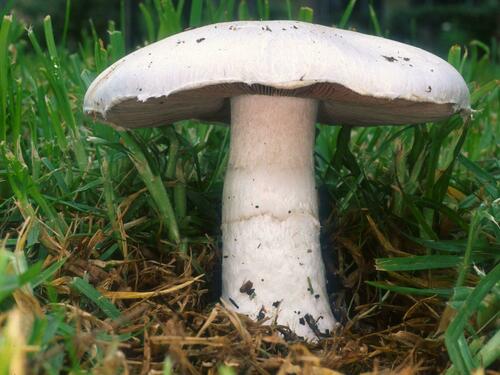 | Meadow MushroomAgaricus campestrisThe species is found in grassy areas around the world.iNat ↗GBIF ↗anonymous · CC BY-SA | Mushrooms | expert | none |
|
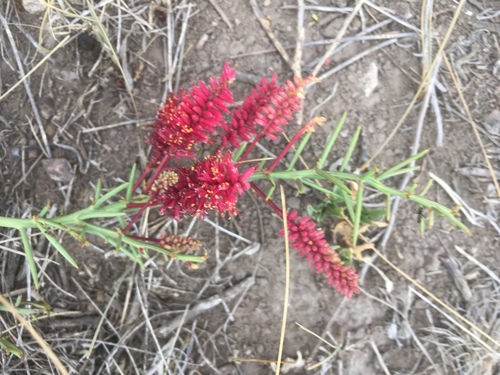 | Mesquite PodsNeltuma spp.The species range from the southwestern and central United States through Mexico, Central America, the Caribbean, and South America to southern Argentina and Uruguay.iNat ↗GBIF ↗Valentín Alfano · CC BY | Fruits | easy | genus-level | none |
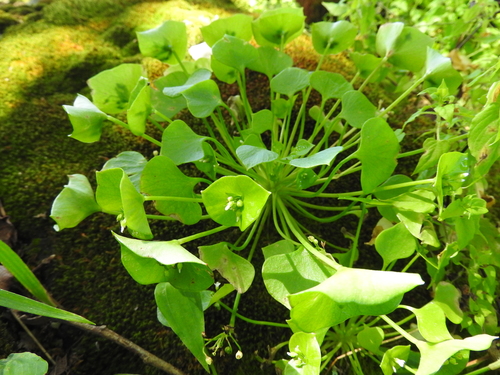 | Miner's LettuceClaytonia perfoliataC. perfoliata is common in the springtime, and prefers a cool, damp environment.iNat ↗GBIF ↗Oscar Alejandro Morales Juárez · CC BY-SA | Wild Greens | easy | none | none |
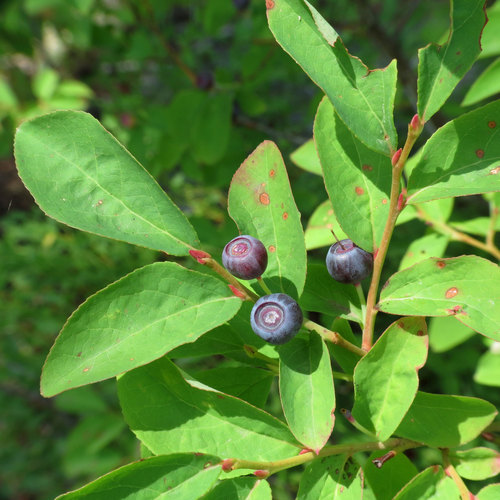 | Mountain HuckleberryVaccinium membranaceumThickets and woodland edges. Moist woods.iNat ↗GBIF ↗Katja Schulz · CC BY | Berries | expert | none |
|
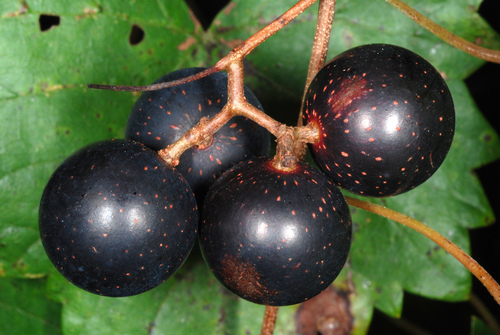 | MuscadineVitis rotundifoliaWoods, thickets, sandhills and shores.iNat ↗GBIF ↗Douglas Goldman · CC BY-SA | Berries | expert | none |
|
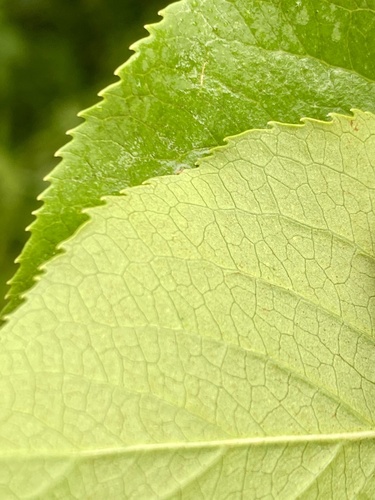 | NannyberryViburnum lentagoRich soils along woodland borders, edges of streams etc, it is also found on rocky hillsides etc.iNat ↗GBIF ↗Emily Summerbell · CC BY | Berries | moderate | none |
|
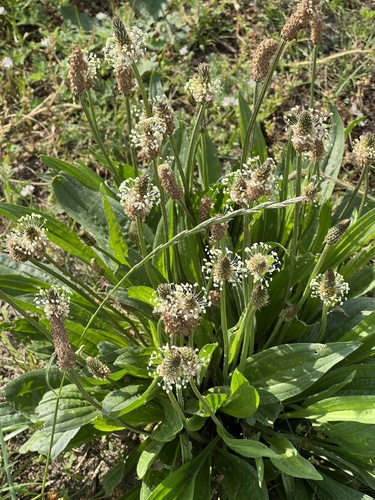 | Narrowleaf PlantainPlantago lanceolataGrassland, roadsides etc, a common weed of lawns and cultivated ground, on neutral and basic soils.iNat ↗GBIF ↗Petr Harant · CC BY | Wild Greens | easy | none | none |
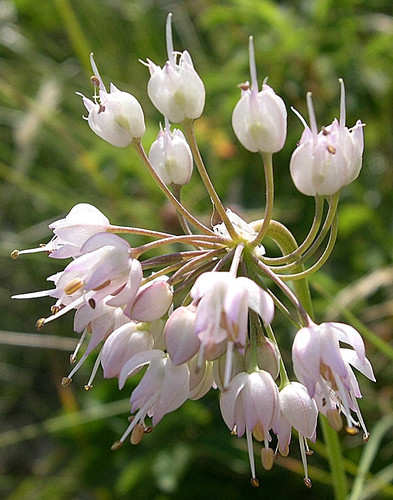 | Nodding OnionAllium cernuumLedges, gravels, rocky or wooded slopes and crests ascending to high altitudes.iNat ↗GBIF ↗Jason Sturner · CC BY | Wild Greens | expert | none |
|
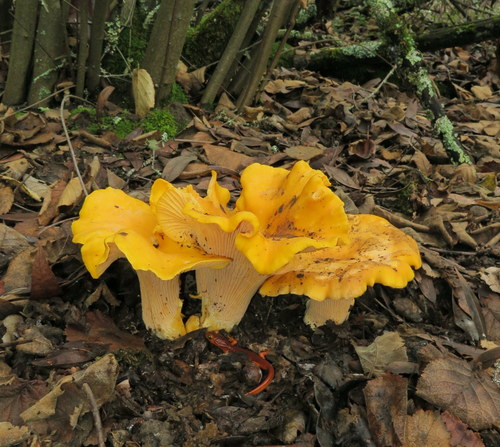 | Oak ChanterelleCantharellus californicusCantharellus californicus forms a mycorrhizal association with oaks, particularly coast live oak in the woodlands of Coastal California.iNat ↗GBIF ↗Alan Rockefeller · CC BY | Mushrooms | easy | none |
|
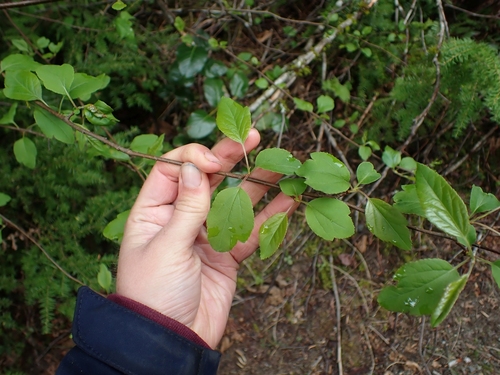 | Oregon Crab AppleMalus fuscaMalus fusca, with the common names Oregon crabapple and Pacific crabapple, is a species of crabapple native to western North America.iNat ↗GBIF ↗Ellyne Geurts · CC0 | Fruits | easy | none | none |
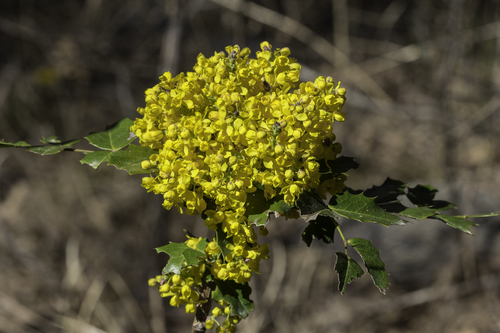 | Oregon GrapeBerberis aquifoliumBerberis aquifolium is a native plant in the North American West from Southeast Alaska to Northern California to central New Mexico, often occurring in the understory of Douglas-fir forests (although other forest types contain the species) and in brushlands in the Cascades, Rockies, and northern Sierra Nevada.iNat ↗GBIF ↗Craig Martin · CC0 | Berries | easy | ⚠ process |
|
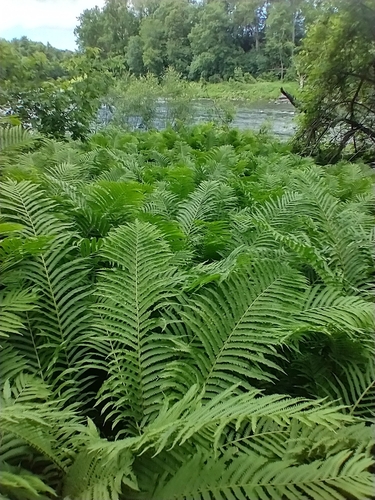 | Ostrich Fern FiddleheadMatteuccia struthiopterisLight shade on rocky stream banks, forming extensive colonies.iNat ↗GBIF ↗Tom Norton · CC BY | Wild Greens | moderate | ⚠ processprotected |
|
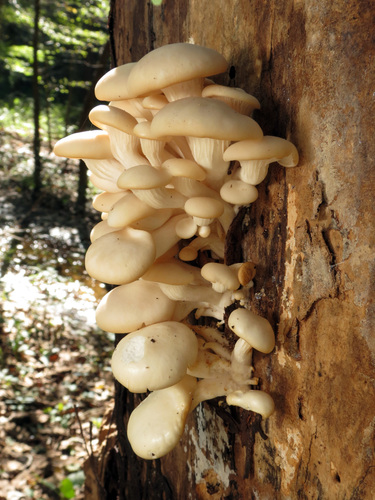 | Oyster MushroomPleurotus ostreatusIt is a saprotroph that acts as a primary decomposer of wood, especially deciduous trees, and beech trees in particular.iNat ↗GBIF ↗Katja Schulz · CC BY | Mushrooms | expert | none |
|
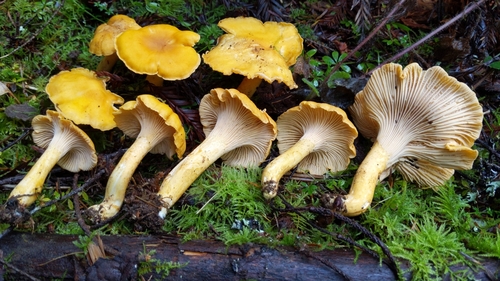 | Pacific Golden ChanterelleCantharellus formosusIt forms a mycorrhizal association with Douglas-fir and western hemlock, and has been shown to be more common in younger (40- to 60-year-old) forests than in old-growth forests.iNat ↗GBIF ↗Alan Rockefeller · CC BY | Mushrooms | easy | none |
|
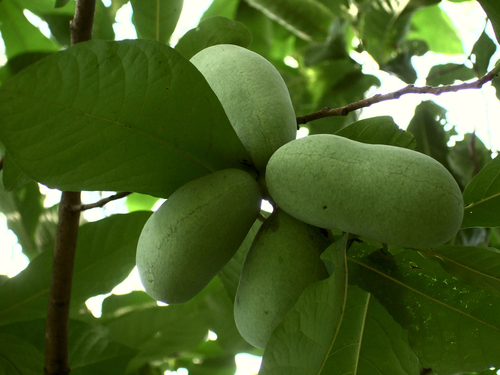 | PawpawAsimina trilobaAn understorey tree of woodlands, growing in deep rich moist soils of river valleys and bottomlands, often forming dense thickets.iNat ↗GBIF ↗Wendell Smith · CC BY | Fruits | easy | none | none |
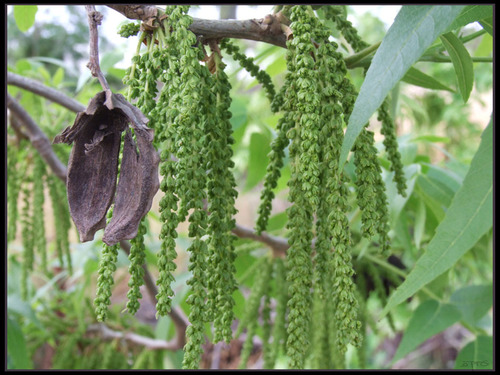 | PecanCarya illinoinensisRich moist soils of bottomlands, especially along the sides of streams.iNat ↗GBIF ↗Eran Finkle · CC BY | Nuts | easy | none | none |
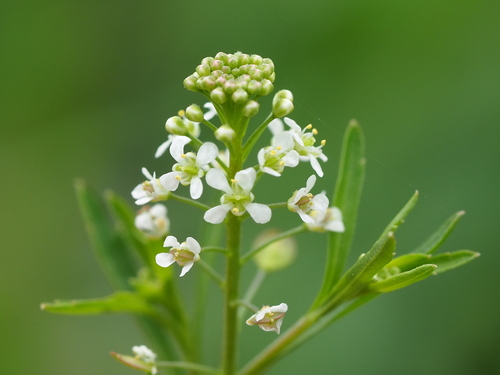 | PeppergrassLepidium virginicumVirginia pepperweed grows as a weed in most crops and is found in roadsides, landscapes and waste areas.iNat ↗GBIF ↗葉子 · CC0 | Wild Greens | easy | none | none |
 | Perennial PeppergrassLepidium latifoliumThe plant is most invasive in wetland habitats, including riparian zones; from there it easily spreads to other ecosystems, such as sagebrush.iNat ↗GBIF ↗Don Loarie · CC BY | Wild Greens | easy | invasive | none |
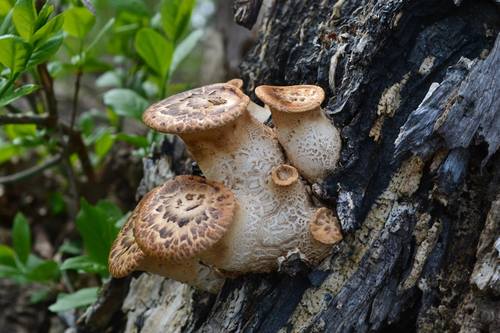 | Pheasant BackCerioporus squamosusDryad's saddle is an annual mushroom commonly found attached to dead logs and stumps or on living hardwood trees at one point with a thick stem.iNat ↗GBIF ↗T. Hammer · CC BY | Mushrooms | easy | none | none |
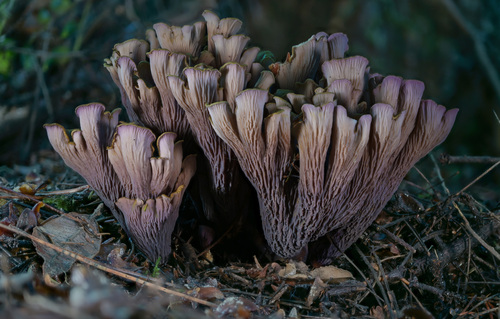 | Pig's EarGomphus clavatusTypically found in coniferous forests in Eurasia and North America, G. clavatus is mycorrhizal and associated with various conifers, particularly spruces and firs.iNat ↗GBIF ↗Alan Rockefeller · CC BY | Mushrooms | moderate | none |
|
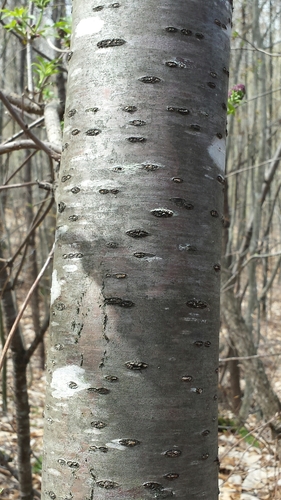 | Pin CherryPrunus pensylvanicaRocky woods in moist rather rich soils. Prefers wet woodlands, old tamarack bogs and interdunal swamps.iNat ↗GBIF ↗Tom Norton · CC BY | Berries | moderate | ⚠ process |
|
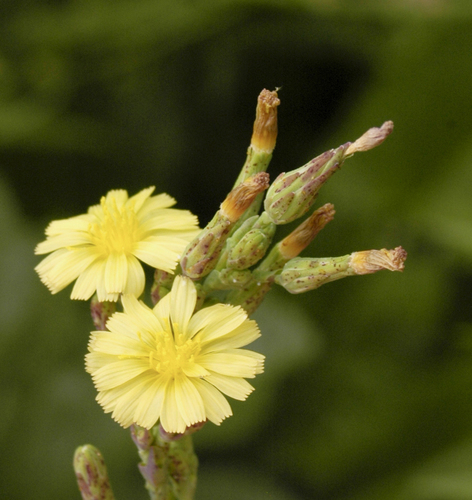 | Prickly LettuceLactuca serriolaIt has a slightly fetid odor and is commonly considered a weed of orchards, roadsides and field crops.iNat ↗GBIF ↗George F Mayfield · CC BY-SA | Wild Greens | easy | none | none |
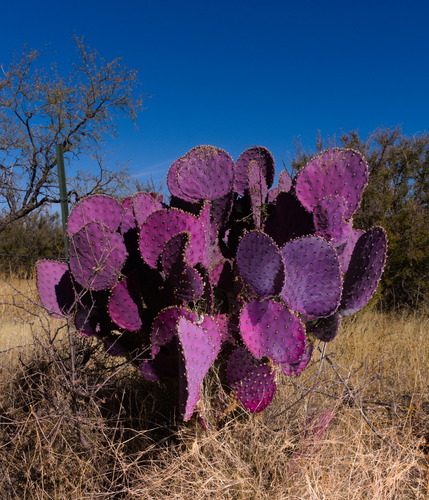 | Prickly PearOpuntia spp.Cacti are native to the Americas, and are well adapted to arid climates; however, they are still vulnerable to alterations in precipitation and temperature driven by climate change.iNat ↗GBIF ↗Mike Ostrowski · CC BY-SA | Wild Greens | easy | ⚠ processgenus-level | none |
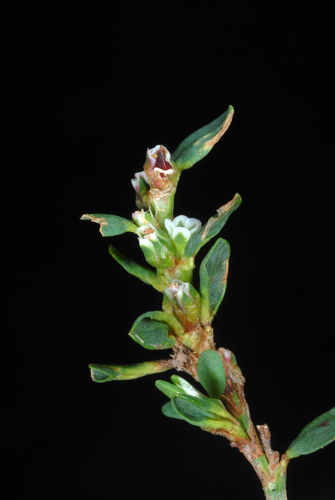 | Prostrate KnotweedPolygonum aviculareWaste places, roadsides, railway embankments and the coast.iNat ↗GBIF ↗Douglas Goldman · CC BY-SA | Wild Greens | easy | none | none |
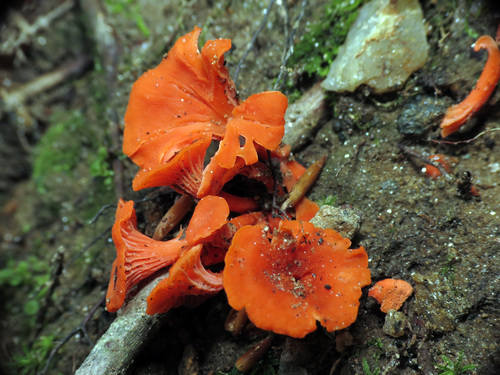 | Red ChanterelleCantharellus cinnabarinusIt can be found from June to October, mostly on the ground in broadleaf and mixed broadleaf/conifer forests.iNat ↗GBIF ↗Katja Schulz · CC BY | Mushrooms | easy | none |
|
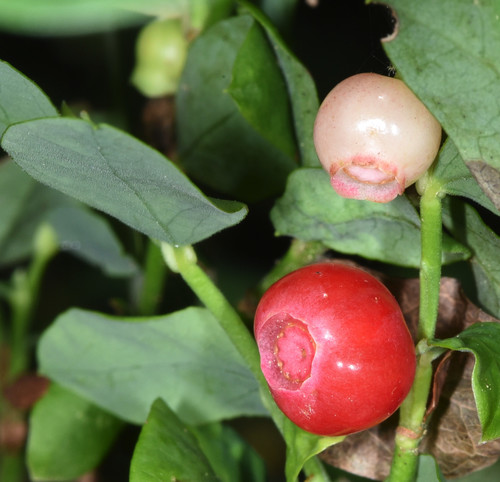 | Red HuckleberryVaccinium parvifoliumIt grows in moist, shaded woodlands.iNat ↗GBIF ↗Don Loarie · CC BY | Berries | expert | none |
|
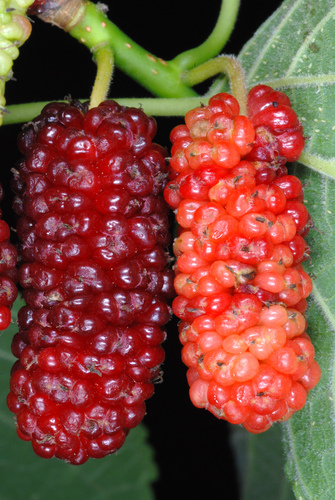 | Red MulberryMorus rubraRich moist woods. Sunny places along the sides of roads. Plants do not grow well on poor soils.iNat ↗GBIF ↗Douglas Goldman · CC BY-SA | Berries | easy | none |
|
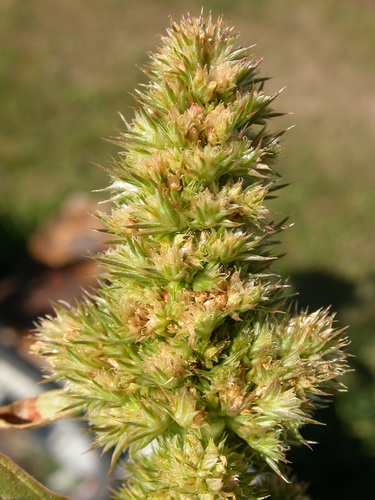 | Redroot AmaranthAmaranthus retroflexusIt may be native to the Neotropics or Central and Eastern North America, but is widespread as an introduced species on most continents in a great number of habitats.iNat ↗GBIF ↗Matt Lavin · CC BY-SA | Wild Greens | easy | none | none |
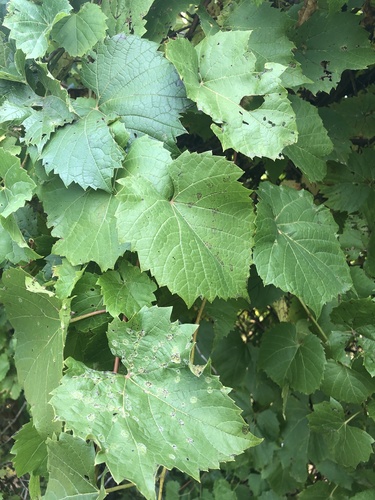 | Riverbank GrapeVitis ripariaRiverbanks, bottomlands, rich thickets and woodland margins.iNat ↗GBIF ↗miquelon · CC BY | Berries | expert | none |
|
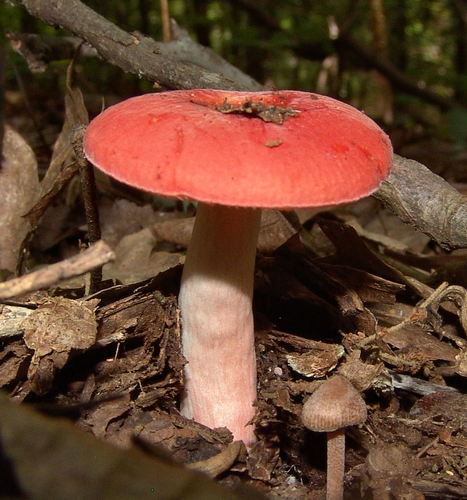 | RussulaRussula spp.All Russula species are ectomycorrhizal symbionts with higher plants and trees, and the genus has a collectively diverse host range.iNat ↗GBIF ↗Gordon C. Snelling · CC BY | Mushrooms | moderate | genus-level |
|
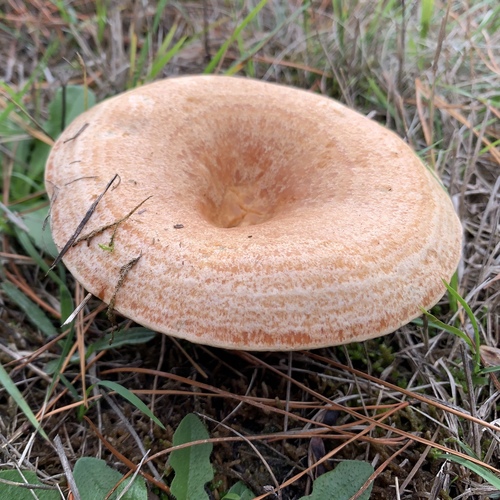 | Saffron Milk CapLactarius deliciosusL. deliciosus grows under conifers on acidic soils and forms a mycorrhizal relationship with its host tree.iNat ↗GBIF ↗Oliver Clarke · CC BY | Mushrooms | moderate | none |
|
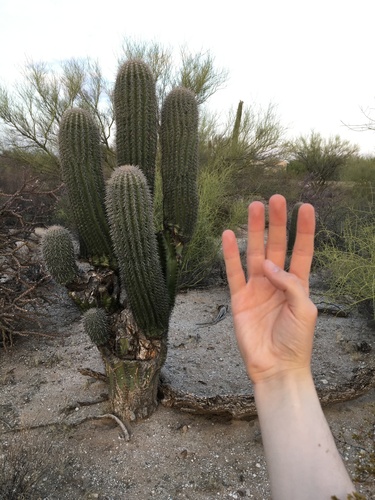 | Saguaro FruitCarnegiea giganteaThe Saguaro is endemic to the Sonoran Desert and is found primarily in western Sonora in Mexico, and in western Arizona in the US.iNat ↗GBIF ↗Harrison J Elkins · CC BY | Berries | easy | protected | none |
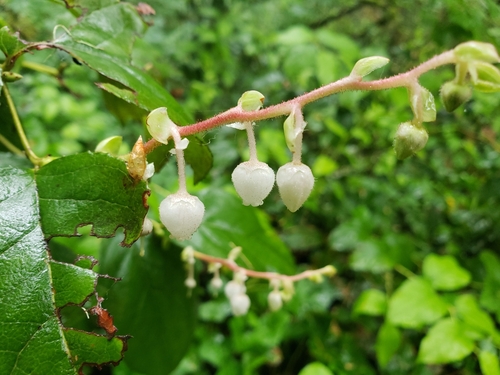 | SalalGaultheria shallonGrows on sandy or peaty soils in shady positions from the coast up to elevations of 800 metres.iNat ↗GBIF ↗Gavin Slater · CC BY | Berries | easy | none | none |
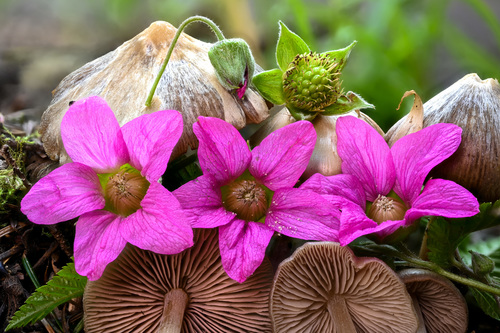 | SalmonberryRubus spectabilisSalmonberries are typically found in coastal areas with nitrogen-rich soils, in moist to wet forests and streambanks, increasing in abundance in areas of high rainfall and decreasing in abundance at higher elevations and continentality.iNat ↗GBIF ↗Alan Rockefeller · CC BY | Berries | easy | none | none |
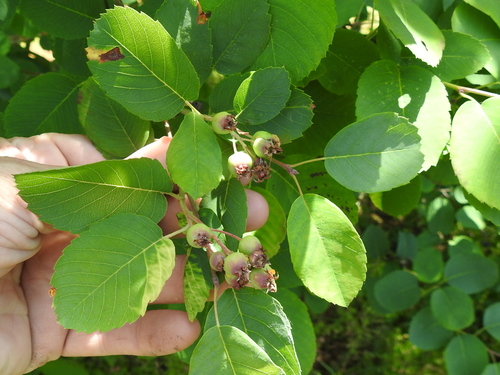 | Saskatoon / Western ServiceberryAmelanchier alnifoliaIt is a common shrub in the forest understory, as well as canyons.iNat ↗GBIF ↗Sam Kieschnick · CC BY | Berries | moderate | none |
|
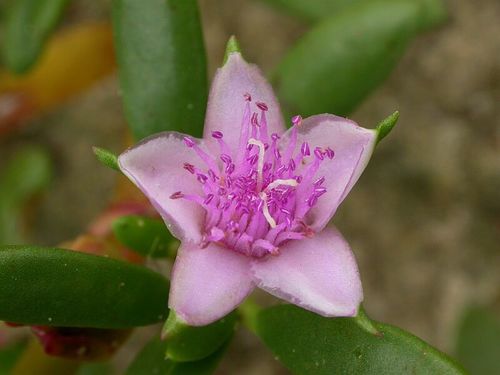 | Sea PurslaneSesuvium portulacastrumIt grows in sandy clay, coastal limestone and sandstone, tidal flats and salt marshes, throughout much of the world.iNat ↗GBIF ↗Nick Block · CC BY | Wild Greens | easy | none | none |
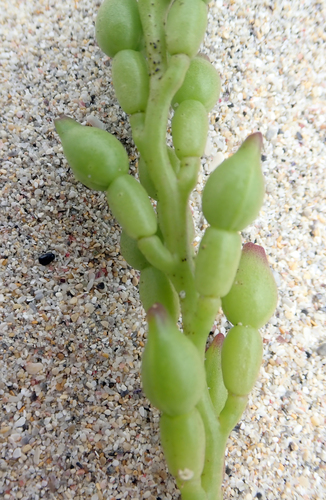 | Sea RocketCakile edentulaCakile edentula grows on the dunes of coastal beaches, as well as shorelines of freshwater lakes. Well drained, sandy soil is preferred.iNat ↗GBIF ↗Peter de Lange · CC0 | Wild Greens | easy | none | none |
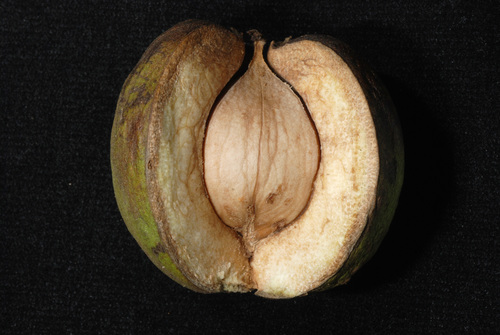 | Shagbark HickoryCarya ovataDry upland slopes, rich deep moist soils and well drained soils of lowland and valleys.iNat ↗GBIF ↗Douglas Goldman · CC BY-SA | Nuts | easy | none | none |
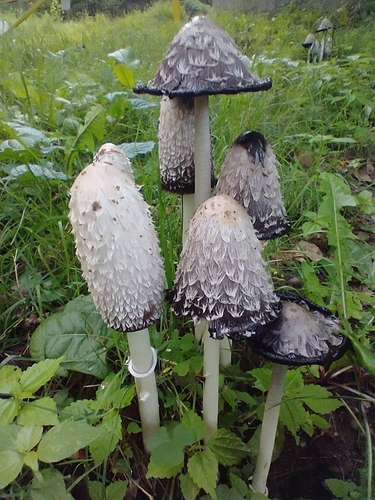 | Shaggy ManeCoprinus comatusIt grows in groups in grasslands and meadows in North America and Europe, from June through to November in the United Kingdom.iNat ↗GBIF ↗Tom Norton · CC BY | Mushrooms | easy | ⚠ process |
|
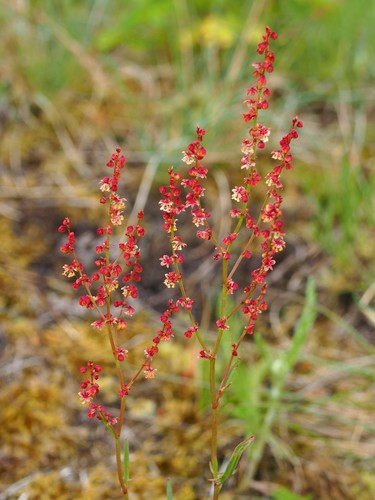 | Sheep SorrelRumex acetosellaHeaths and acid grasslands. A weed of acid soils.iNat ↗GBIF ↗Agnieszka Kwiecień, Nova · CC BY-SA | Wild Greens | easy | none | none |
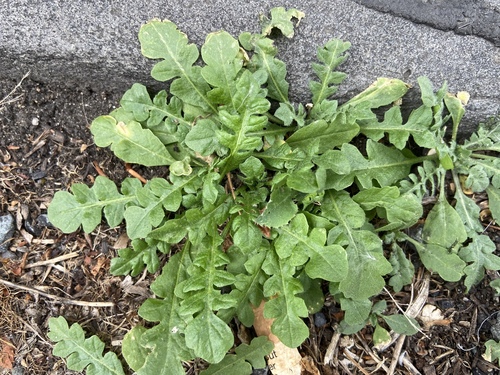 | Shepherd's PurseCapsella bursa-pastorisThe plant is native to Eurasia but is naturalized and considered a common weed in many parts of the world, especially in colder climates.iNat ↗GBIF ↗Joss Carr · CC BY | Wild Greens | easy | none | none |
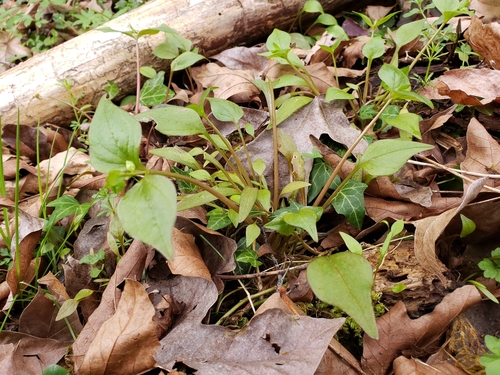 | Siberian Miner's LettuceClaytonia sibiricaIt is native to Aleutian Islands and western North America and has been introduced into parts of Europe and Scandinavia.iNat ↗GBIF ↗Gavin Slater · CC BY | Wild Greens | easy | invasive | none |
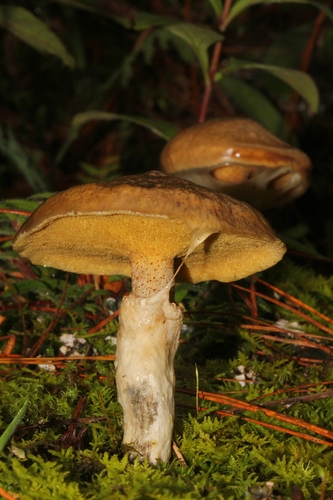 | Slippery JackSuillus spp.Species in the genus are associated with trees in the pine family (Pinaceae), and are mostly distributed in temperate locations in the Northern Hemisphere, although some species have been introduced to the Southern Hemisphere.iNat ↗GBIF ↗Alan Rockefeller · CC BY | Mushrooms | easy | genus-level | none |
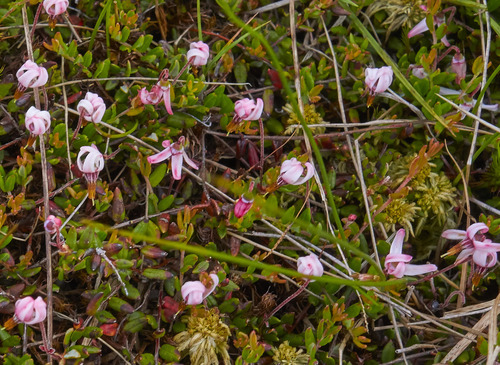 | Small CranberryVaccinium oxycoccosIt is an indicator of moist to wet soils which are low in nitrogen and have a high water table.iNat ↗GBIF ↗David Bird · CC0 | Berries | expert | none |
|
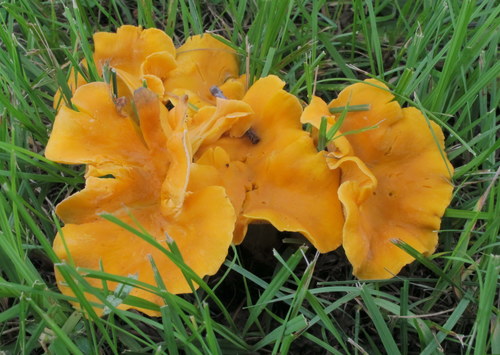 | Smooth ChanterelleCantharellus lateritiusTypically found growing solitary, in groups or in clusters under hardwood trees, the fungus produces fruit bodies in the summer and autumn.iNat ↗GBIF ↗mycowalt · CC BY-SA | Mushrooms | easy | none |
|
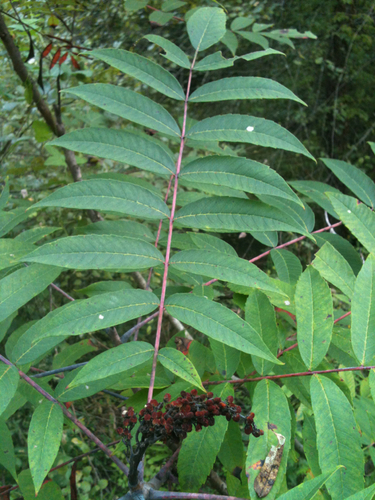 | Smooth SumacRhus glabraIt can be found in a wide variety of habitats, from streambanks to dry and montane slopes.iNat ↗GBIF ↗botanygirl · CC BY | Fruits | easy | none |
|
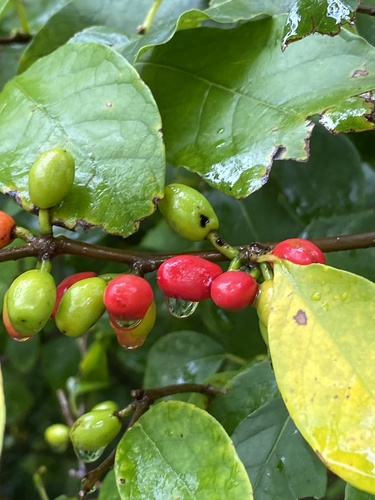 | SpicebushLindera benzoinIt is native to eastern North America, growing in the understory in moist, rich woods.iNat ↗GBIF ↗Sandy Wolkenberg · CC BY | Wild Greens | easy | none | none |
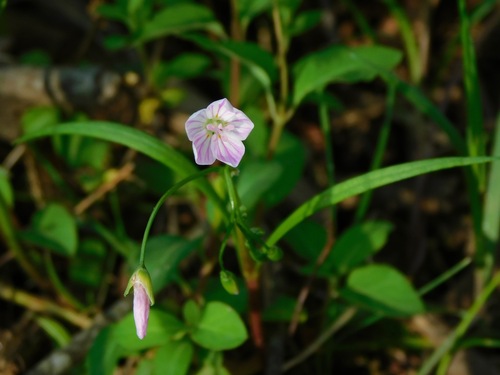 | Spring BeautyClaytonia virginicaRich woods, thickets and clearings.iNat ↗GBIF ↗Michael J. Papay · CC BY | Wild Greens | easy | none | none |
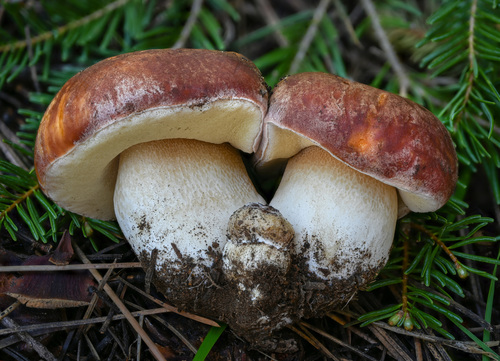 | Spring King BoleteBoletus rex-verisIt is often buried under needle duff and fruits from May to June in California.iNat ↗GBIF ↗Alan Rockefeller · CC BY | Mushrooms | moderate | none |
|
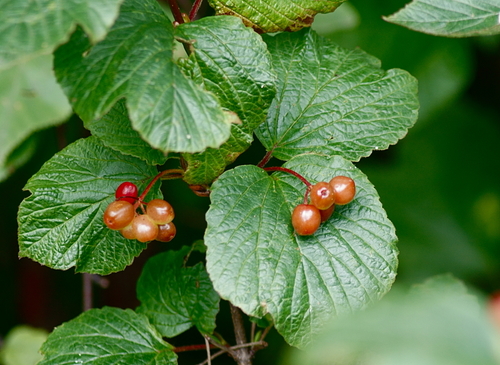 | Squashberry / MooseberryViburnum eduleSquashberry is distributed across Canada, all throughout Alaska, and in northern states of the US Specifically, it can abundantly be found in the following regions: the Yukon, northern Quebec, western District of Mackenzie to James Bay, south Newfoundland to Oregon, Idaho, Colorado, Minnesota and Pennsylvania.iNat ↗GBIF ↗psweet · CC BY-SA | Berries | easy | none | none |
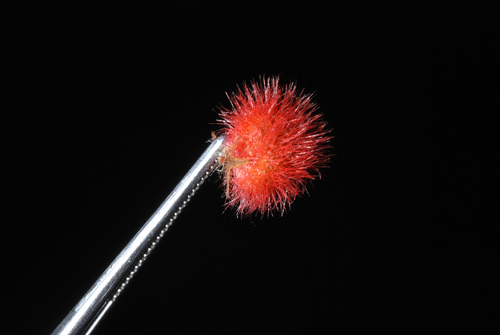 | Staghorn SumacRhus typhinaUsually found in upland sites on rich soils, but it is also found in gravel and sandy nutrient-poor soils. It grows by streams and swamps, along roadsides, railway embankments and edges of woods.iNat ↗GBIF ↗Douglas Goldman · CC BY-SA | Fruits | easy | none |
|
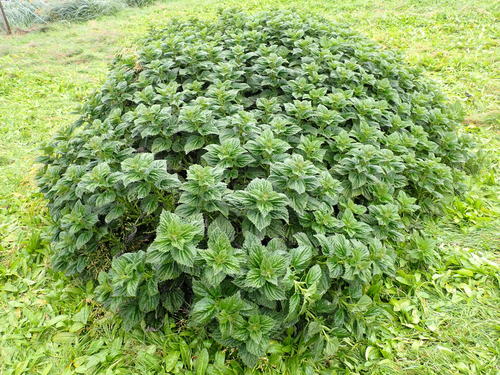 | Stinging NettleUrtica dioicaWaste ground, hedgerows, woods etc, preferring a rich soil and avoiding acid soils.iNat ↗GBIF ↗georgiasteel · CC0 | Wild Greens | easy | ⚠ process |
|
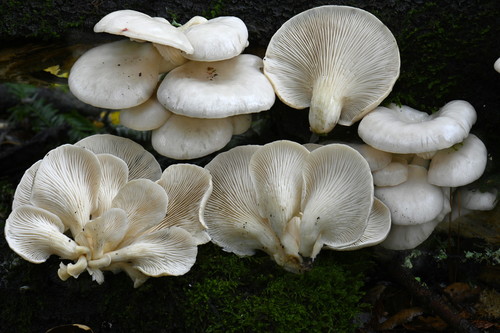 | Summer Oyster MushroomPleurotus pulmonariusIn the eastern United States, this species is generally found on hardwoods while in the west it can also be found on conifers.iNat ↗GBIF ↗Alan Rockefeller · CC BY | Mushrooms | expert | none |
|
 | Tapertip OnionAllium acuminatumIts native habitats include open, rocky slopes, among brush and pines.iNat ↗GBIF ↗Alex Abair · CC BY | Wild Greens | expert | none |
|
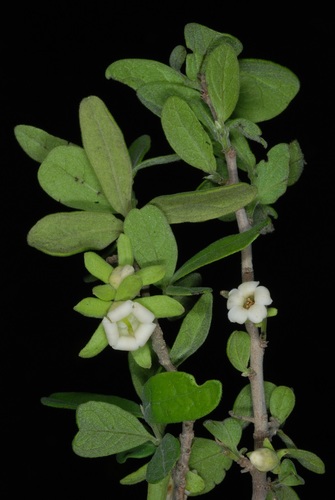 | Texas PersimmonDiospyros texanaThroughout its range, D. texana favors riparian zones, prairie margins, and rocky slopes. It prefers well-drained, alkaline soils.iNat ↗GBIF ↗Douglas Goldman · CC BY-SA | Fruits | easy | none | none |
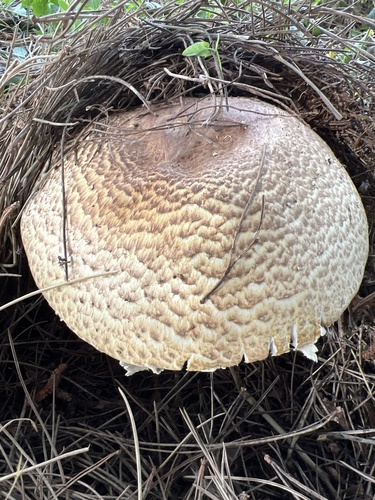 | The PrinceAgaricus augustusThe mushroom is found in deciduous and coniferous woods and in gardens and by roadside verges.iNat ↗GBIF ↗Lauren Ware · CC BY | Mushrooms | expert | none |
|
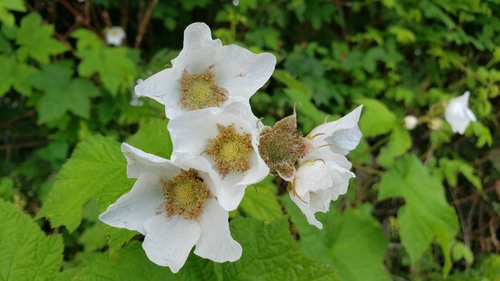 | ThimbleberryRubus parviflorusRubus parviflorus is native to western North America from Alaska south as far as California, New Mexico, Chihuahua, and San Luis Potosí.iNat ↗GBIF ↗Gavin Slater · CC BY | Berries | easy | none | none |
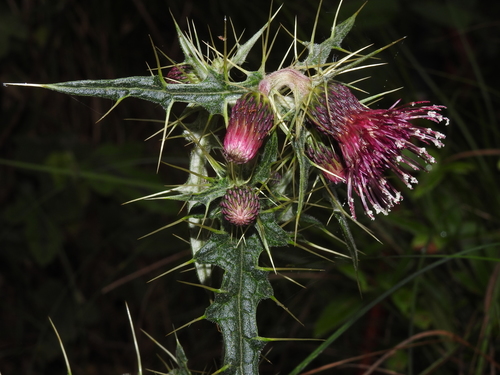 | ThistleCirsium spp.They are mostly native to Eurasia and northern Africa, with about 60 species from North America (although several species have been introduced outside their native ranges).iNat ↗GBIF ↗Jacy Chen · CC BY | Wild Greens | easy | genus-level | none |
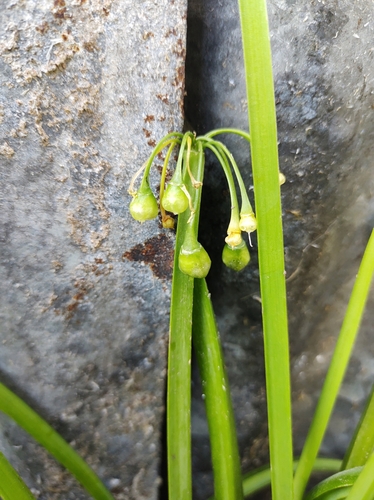 | Three-Cornered LeekAllium triquetrumIt has also been introduced to Great Britain, Ireland, Azores, New Zealand, Turkey, Australia, California, Oregon, and South America, and is a declared noxious weed in some of those places.iNat ↗GBIF ↗Lucas Carbone · CC BY | Wild Greens | expert | invasive |
|
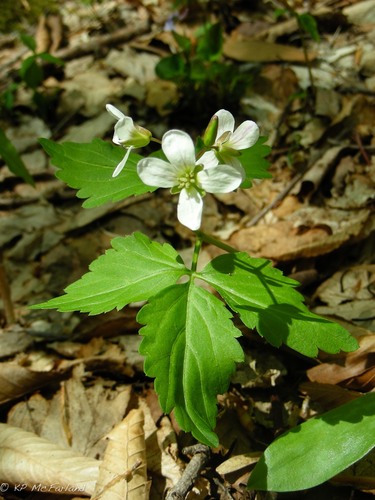 | ToothwortCardamine diphyllaRich damp woods and meadows.iNat ↗GBIF ↗Kent McFarland · CC0 | Wild Greens | easy | none | none |
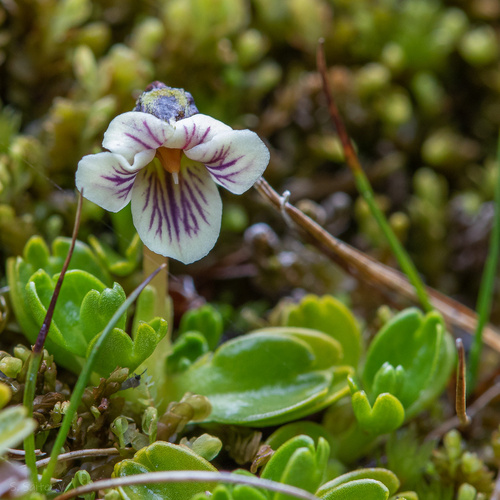 | Violet LeavesViola spp.Most species are found in the temperate Northern Hemisphere; however, some are also found in widely divergent areas such as Hawaii, Australasia, and the Andes.iNat ↗Sebastián Saiter V. · CC BY | Wild Greens | easy | genus-level | none |
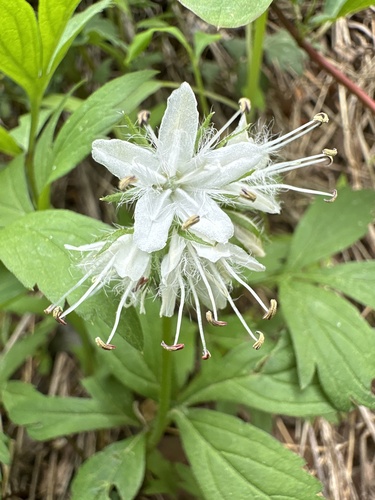 | Virginia WaterleafHydrophyllum virginianumIts natural habitat is in bottomland forests, mesic upland forests, and rocky forested bluffs.iNat ↗GBIF ↗Ashwin Srinivasan · CC BY | Wild Greens | easy | none | none |
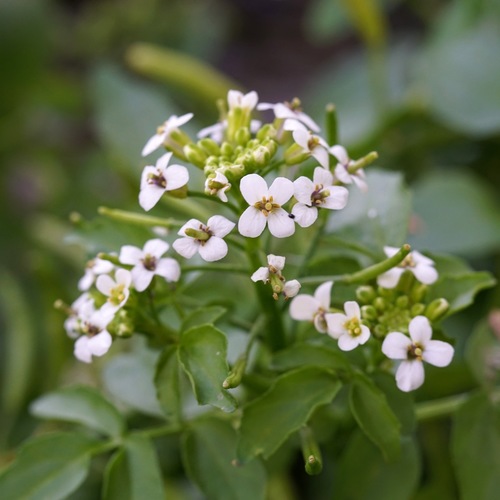 | WatercressNasturtium officinaleAn aquatic vegetable or herb, watercress has grown in many temperate locations worldwide.iNat ↗GBIF ↗Andrew Tree · CC BY | Wild Greens | expert | none |
|
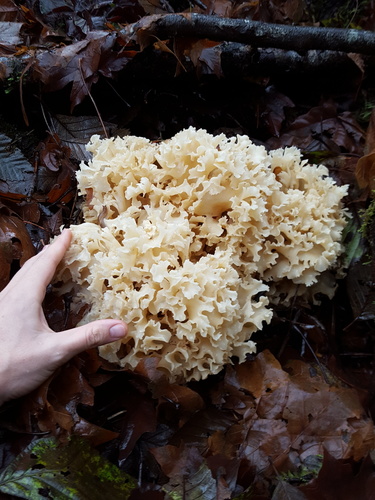 | Western Cauliflower MushroomSparassis radicataThey grow as parasites or saprobes on the roots or bases of various species of hardwoods, especially oak, and conifers, and hence are most commonly found growing close to fir, pine, oak or spruce trees.iNat ↗GBIF ↗Alex Abair · CC BY | Mushrooms | easy | none | none |
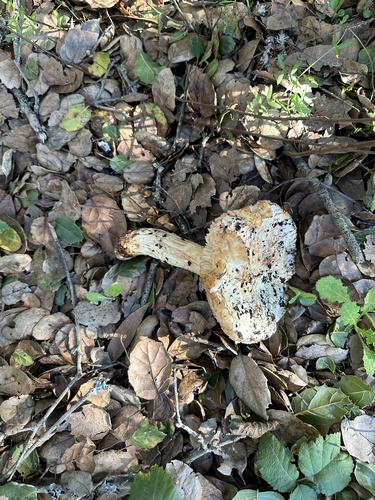 | Western MatsutakeTricholoma murrillianumT. murrillianum is found in western North America from October to January, especially on the West Coast in sandy soil, along with pines, Douglas-fir, tanoak, madrone, and manzanita.iNat ↗GBIF ↗Anisha Kumra · CC BY | Mushrooms | expert | none |
|
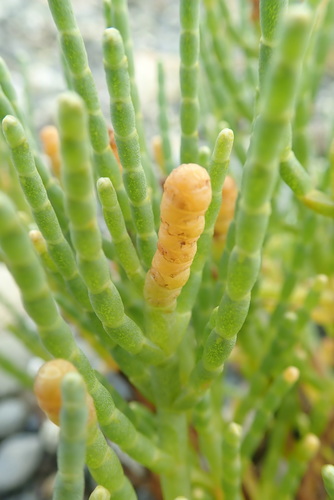 | Western PickleweedSalicornia pacificaThe species is native to salt marshes and alkaline soils along the Pacific coast of North America.iNat ↗GBIF ↗Randal · CC0 | Wild Greens | easy | none | none |
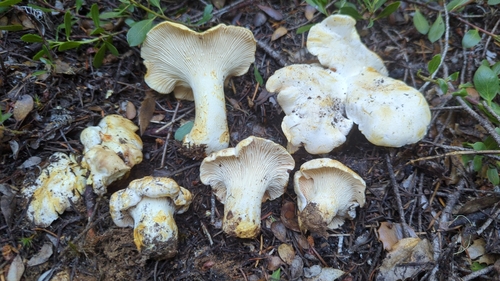 | White ChanterelleCantharellus subalbidusCantharellus subalbidus may form a mycorrhizal association with species of pine, hemlock, Douglas-fir, and Pacific madrone.iNat ↗GBIF ↗Alan Rockefeller · CC BY | Mushrooms | easy | none |
|
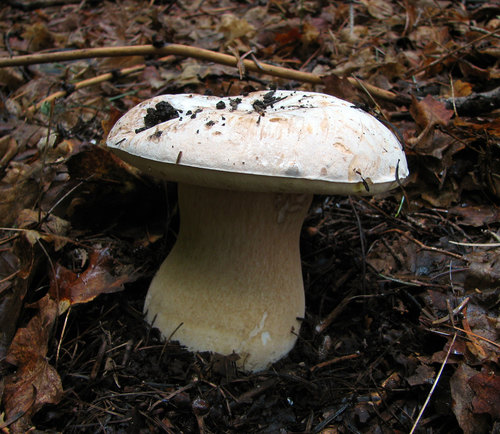 | White King BoleteBoletus barrowsiiIt can be found under ponderosa pine and live oak in western North America during autumn.iNat ↗GBIF ↗Katja Schulz · CC BY | Mushrooms | moderate | none |
|
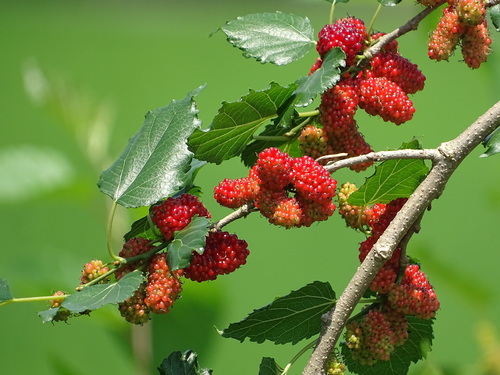 | White MulberryMorus albaIt is widely naturalized in disturbed areas such as roadsides and the edges of tree lots, along with urban areas in much of North America, where it hybridizes readily with the locally native red mulberry (Morus rubra).iNat ↗GBIF ↗葉子 · CC0 | Berries | easy | invasive |
|
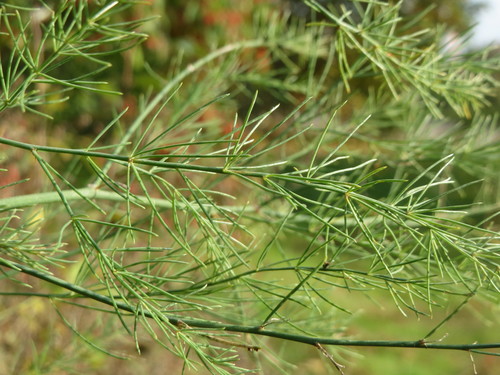 | Wild AsparagusAsparagus officinalisFertile and sandy soils by the seashore and along river banks.iNat ↗GBIF ↗Andreas Rockstein · CC BY-SA | Wild Greens | easy | invasive | none |
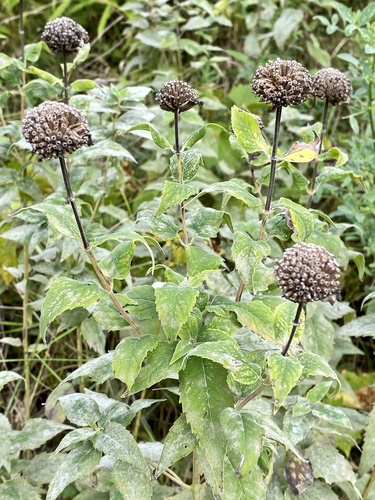 | Wild BergamotMonarda fistulosaWild bergamot often grows in rich soils in dry fields, thickets, and clearings, usually on limy soil.iNat ↗GBIF ↗tzeducation · CC BY | Wild Greens | easy | none | none |
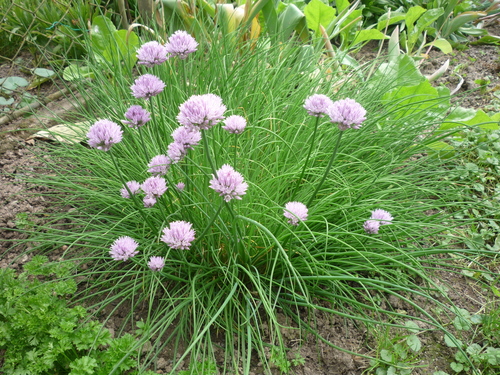 | Wild ChivesAllium schoenoprasumA perennial plant, A. schoenoprasum is widespread in nature across much of Eurasia and North America. It is the only species of Allium native to both the New World and Old World.iNat ↗GBIF ↗Pohled 111 · CC BY-SA | Wild Greens | expert | none |
|
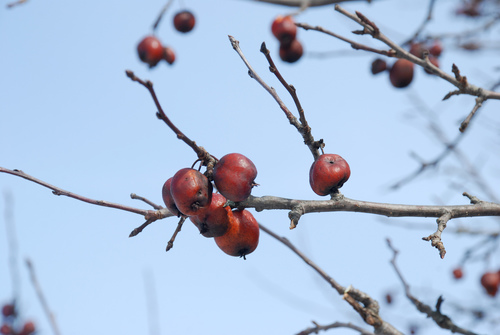 | Wild Crab AppleMalus spp.The genus is native to the temperate zone of the Northern Hemisphere.iNat ↗GBIF ↗Douglas Goldman · CC BY-SA | Fruits | easy | genus-level | none |
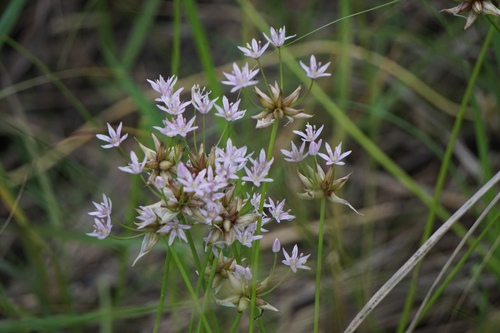 | Wild GarlicAllium canadenseAllium canadense, the Canada onion, Canadian garlic, wild garlic, meadow garlic and wild onion is a perennial plant native to eastern North America from Texas to Florida to New Brunswick to Montana.iNat ↗GBIF ↗Mike B · CC BY-SA | Wild Greens | expert | none |
|
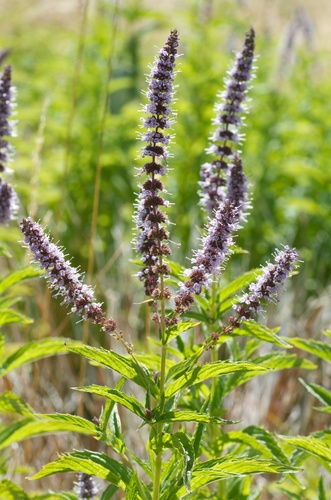 | Wild MintMentha spp.The genus has a subcosmopolitan distribution, growing best in wet environments and moist soils.iNat ↗GBIF ↗Jon Sullivan · CC BY | Wild Greens | easy | genus-level | none |
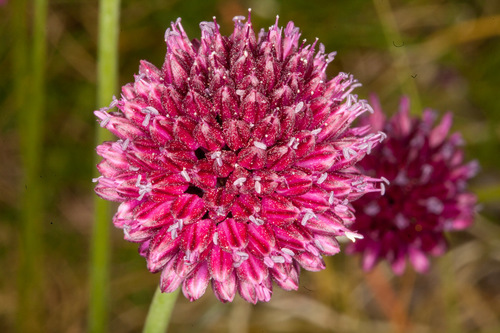 | Wild OnionAllium spp.Allium species occur in temperate climates of the Northern Hemisphere, except for a few species occurring in Chile (such as A. juncifolium), Brazil (A. sellovianum), and tropical Africa (A. spathaceum).iNat ↗GBIF ↗Drepanostoma · CC BY | Wild Greens | expert | genus-level |
|
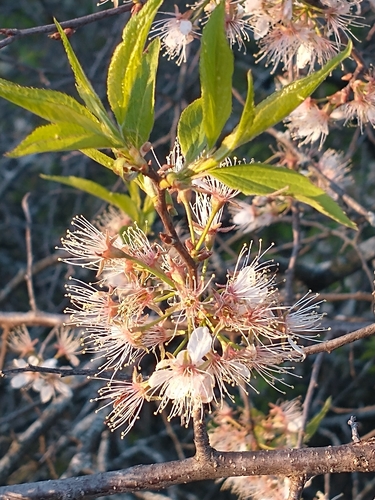 | Wild PlumPrunus americanaRich soils in mixed deciduous woodland, by streams, on the borders of swamps and in hedgerows.iNat ↗GBIF ↗Tom Norton · CC BY | Fruits | moderate | none |
|
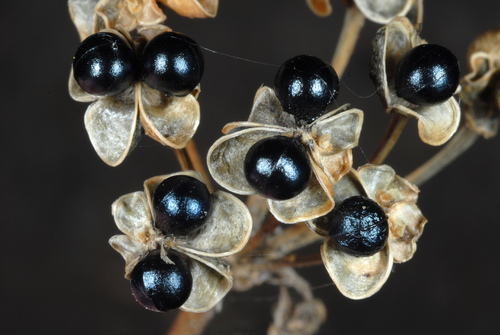 | Wild RampsAllium tricoccumIt is a North American species of wild onion or garlic found in eastern North America.iNat ↗GBIF ↗Douglas Goldman · CC BY-SA | Wild Greens | expert | protected |
|
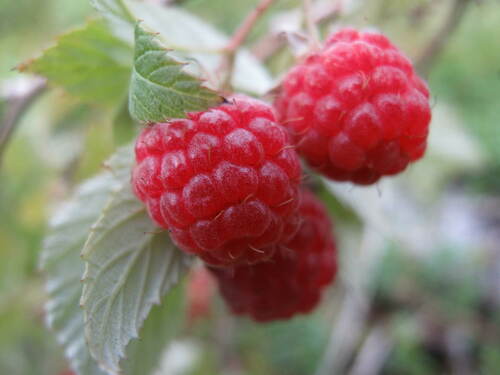 | Wild Red RaspberryRubus idaeusAs a wild plant, R. idaeus typically grows in forests, forming open stands under a tree canopy, and denser stands in clearings.iNat ↗GBIF ↗Ole Husby · CC BY-SA | Berries | easy | none | none |
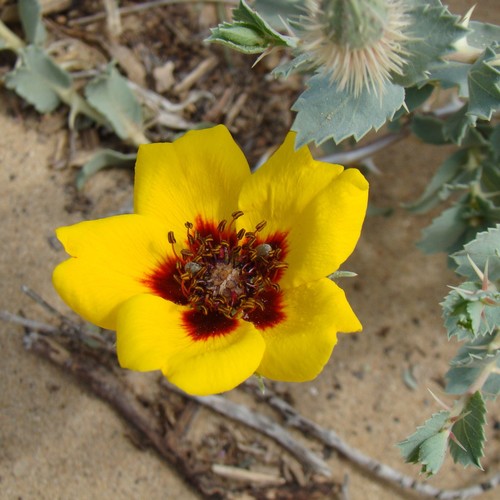 | Wild RoseRosa spp.Most species are native to Asia, with smaller numbers native to Europe, North America, and Northwest Africa.iNat ↗GBIF ↗Юрий Данилевский (Yuriy Danilevsky) · CC BY | Wild Greens | easy | genus-level | none |
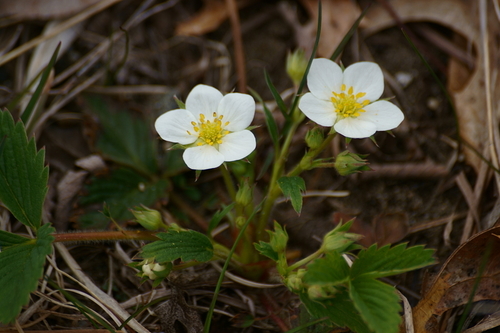 | Wild StrawberryFragaria virginianaFields, open slopes and woodland edges.iNat ↗GBIF ↗psweet · CC BY-SA | Berries | easy | none |
|
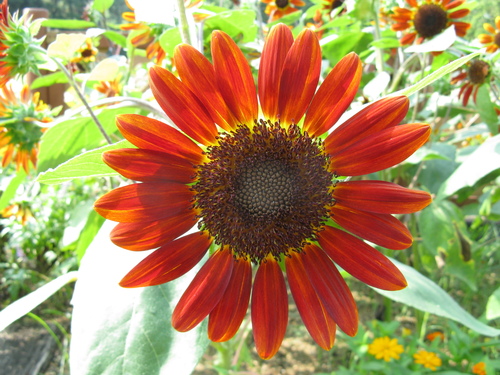 | Wild SunflowerHelianthus annuusOpen dry or moderately moist soils on the plains.iNat ↗GBIF ↗ KENPEI · CC BY | Nuts | easy | none | none |
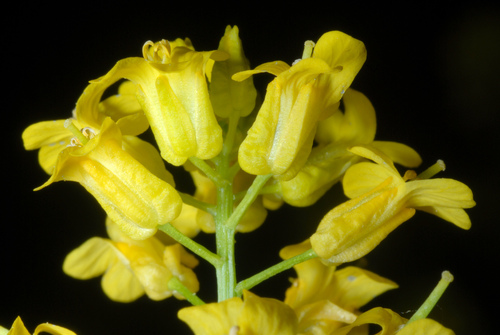 | Winter CressBarbarea vulgarisMoist places, roadsides, stream banks and hedges.iNat ↗GBIF ↗Douglas Goldman · CC BY-SA | Wild Greens | easy | none | none |
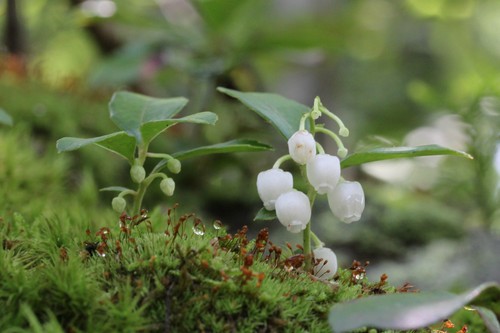 | Wintergreen / TeaberryGaultheria procumbensSterile woods (poor acid soils) and clearings. Especially found beneath evergreen trees.iNat ↗GBIF ↗Fluff Berger · CC BY-SA | Berries | expert | none |
|
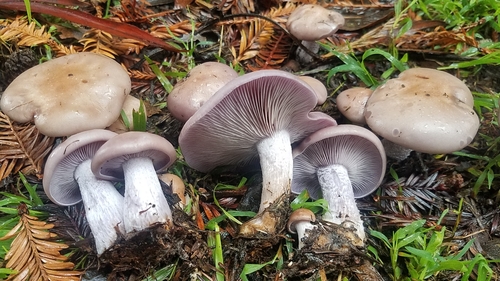 | Wood BlewitCollybia nudaIt is a saprotrophic species, growing on decaying leaf litter.iNat ↗GBIF ↗Alan Rockefeller · CC BY | Mushrooms | expert | ⚠ process |
|
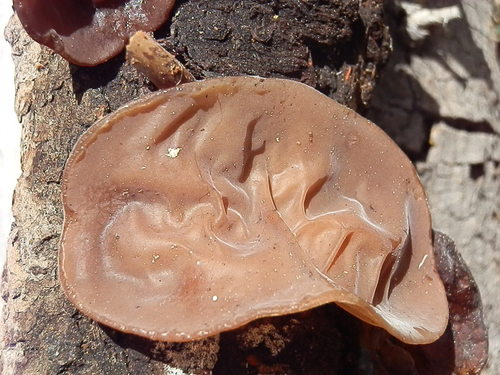 | Wood EarAuricularia americanaIts basidiocarps (fruitbodies) are gelatinous, ear-like, and grow on dead conifer wood.iNat ↗GBIF ↗pinonbistro · CC BY-SA | Mushrooms | easy | none | none |
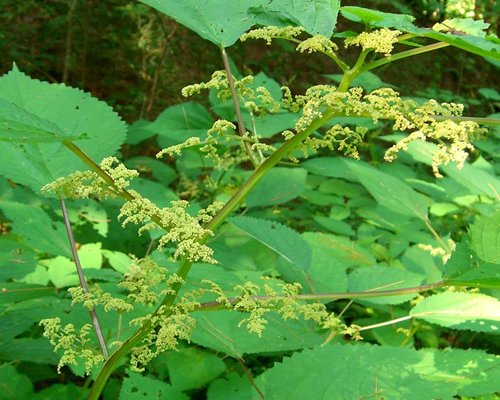 | Wood NettleLaportea canadensisIt is found growing in open woods with moist rich soils and along streams and in drainages.iNat ↗GBIF ↗Jason Hollinger · CC BY | Wild Greens | easy | ⚠ process |
|
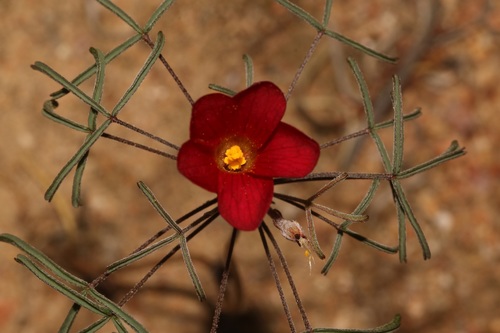 | Wood SorrelOxalis spp.The genus occurs throughout most of the world, except for the polar areas; species diversity is particularly rich in tropical Brazil, Mexico, and South Africa.iNat ↗GBIF ↗Brian du Preez · CC BY-SA | Wild Greens | easy | genus-level | none |
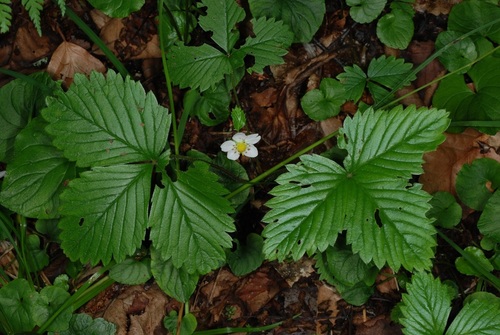 | Wood StrawberryFragaria vescaShaded, fairly damp places in woodland.iNat ↗GBIF ↗Douglas Goldman · CC BY-SA | Berries | easy | none |
|
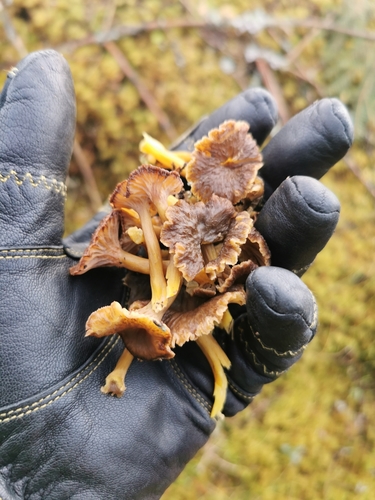 | Yellowfoot ChanterelleCraterellus tubaeformisGrowing in large groups, it is most common in forests with a large amount of well-rotted coarse woody debris, growing on moss or rotten wood, and in North America mostly in conifer bogs.iNat ↗GBIF ↗Thor-Rune Hansen · CC BY-SA | Mushrooms | easy | none |
|
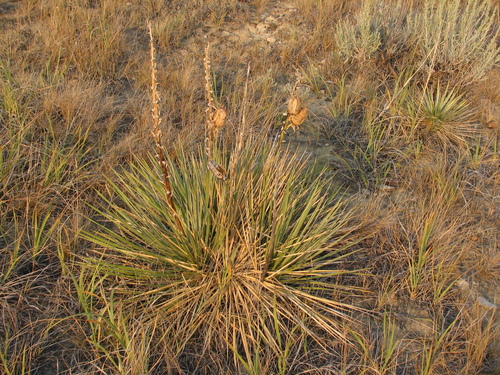 | YuccaYucca spp.Yucca is both the scientific name and common name for a genus native to North America from Panama to southern Canada.iNat ↗GBIF ↗Doug Macaulay · CC BY | Wild Greens | easy | genus-level | none |
Always confirm any wild edible with multiple sources and an experienced local guide before eating it. Many edible species have toxic look-alikes.