← Forage Calendar mapKnow this look-alike
Chestnut vs Horse Chestnut and Buckeye
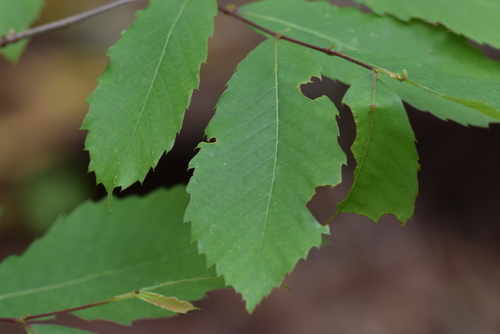
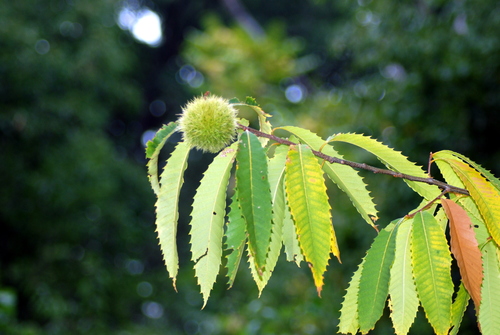
These look-alikes can make you seriously ill. Get the identification right before you eat anything. True chestnuts come in a dense, finely spined bur holding one to three flattened nuts. The toxic horse chestnut and buckeye have a leathery husk with a few short stout spikes and a single round nut with a large pale scar. The bur and nut shape tell them apart.
The dangerous species
⚠ do not eatHorse Chestnut / Buckeye
Aesculus hippocastanum / A. glabra (Ohio Buckeye) / Aesculus spp.
Alvesgaspar · CC BY 2.5
How to tell it apart
- Leaves are opposite, palm-shaped compound, with usually 7 leaflets; leaflets 4–6 inches long, 1½–2½ inches wide, broadest in the middle, margin finely toothed; upper surface bluish- or grass green; lower surface paler, smooth. — Missouri Department of Conservation ↗
- The inedible seeds contain tannic acid and are poisonous to cattle and humans. — Wikipedia ↗
Edibles people confuse with these
If you are foraging any of these, rule out the look-alikes above every time.
The notes above are an educational starting point, not a substitute for a field guide or an experienced forager. If you are not completely certain, do not eat it.