← Forage Calendar mapKnow this look-alike
Chanterelle Look-alikes: Jack-o-Lantern and False Chanterelle
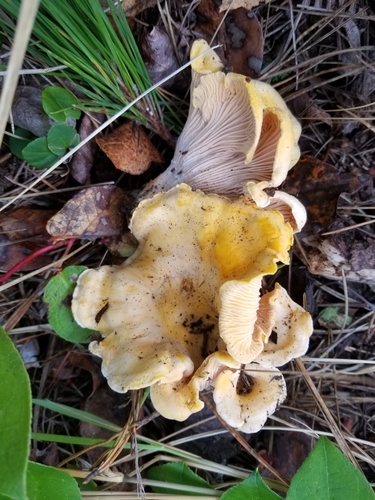
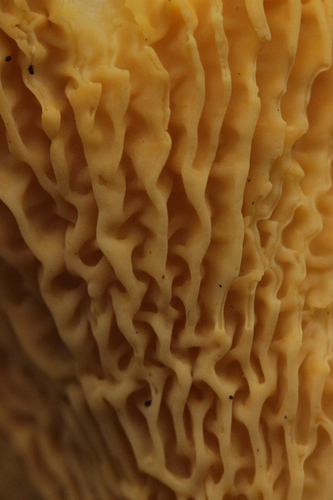
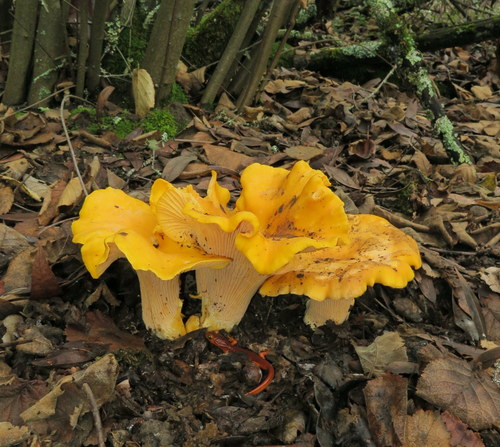
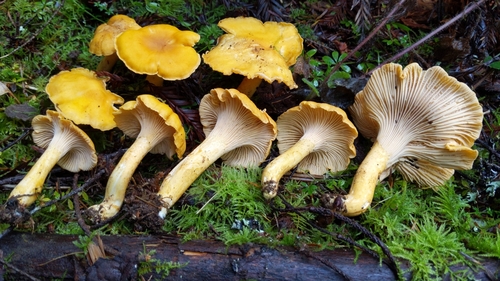
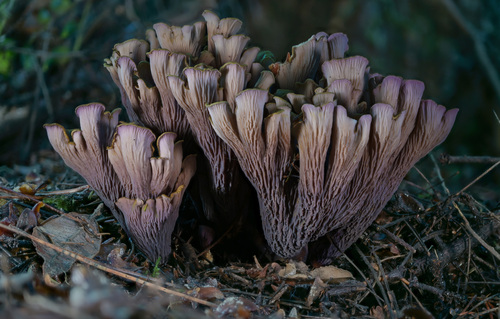
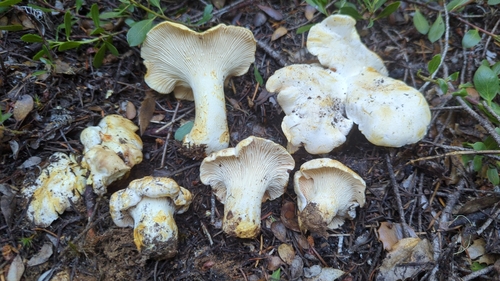
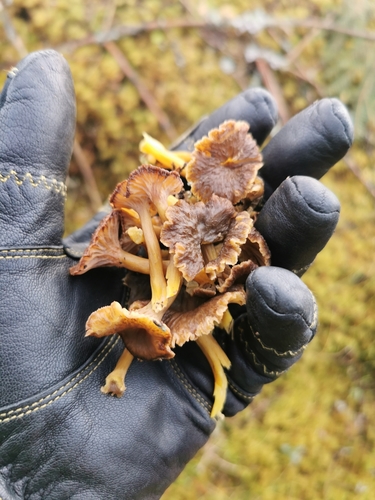
These look-alikes can make you seriously ill. Get the identification right before you eat anything. Chanterelles have blunt, forked ridges that run down the stem, grow from soil, and smell fruity. The jack-o-lantern has true sharp gills, grows in clusters on wood, and causes violent stomach illness. The false chanterelle is milder but still best avoided.
The dangerous species
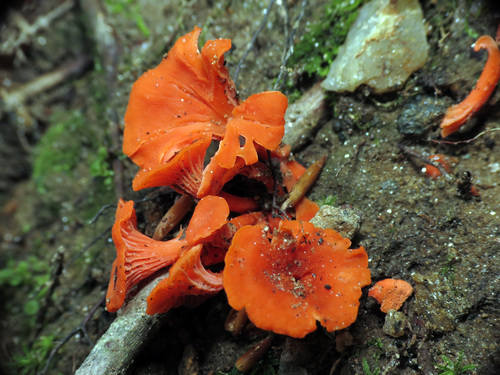
⚠ do not eatJack-o-Lantern
Omphalotus olearius / O. illudens / O. olivascens
Antonio Abbatiello · Public domain
How to tell it apart
- Fungi of this genus produce fleshy mushrooms with smooth or fibrous caps with gills and fleshy or fibrous stems growing in clumps on wood. — Wikipedia ↗
- The jack o'lantern mushroom is poisonous; while not lethal, consuming this mushroom leads to very severe cramps, vomiting, and diarrhea. — Wikipedia ↗
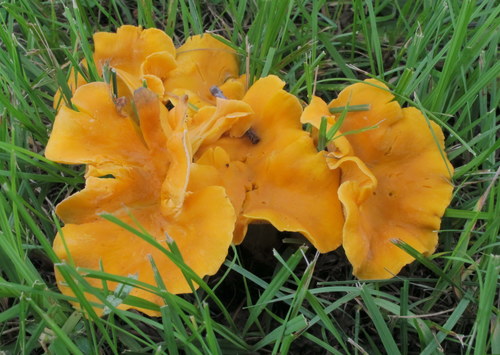
⚠ do not eatFalse Chanterelle
Hygrophoropsis aurantiaca
Holger Krisp · CC BY 3.0
How to tell it apart
- Often a brighter orange than the cap colour, the repeatedly-forking gill-like spore-producing structures of the False Chanterelle are deeply decurrent and narrow. — First Nature ↗
- The false chanterelle is considered poisonous and may cause serious digestive problems. — Wikipedia ↗
⚠ do not eatWoolly Chanterelle / Scaly Vase
Gomphus floccosus / Turbinellus floccosus
Scott Darbey from Canada · CC BY 2.0
How to tell it apart
- Colored various shades of reddish- to yellowish-orange, the cap surface is broken into scales, with the spaces between more yellow and the scales themselves more orange. — Wikipedia ↗
- Though mild-tasting, they generally cause gastrointestinal symptoms of nausea, vomiting and diarrhea when consumed. — Wikipedia ↗
Edibles people confuse with these
If you are foraging any of these, rule out the look-alikes above every time.
The notes above are an educational starting point, not a substitute for a field guide or an experienced forager. If you are not completely certain, do not eat it.