← Forage Calendar mapKnow this look-alike
King Bolete (Porcini) Look-alikes: Bitter and Satan's Bolete
These look-alikes can make you seriously ill. Get the identification right before you eat anything. King boletes have a white pore surface that ages to yellow-green, a pale net on the stem, and flesh that does not stain blue. The bitter bolete ruins a meal with a pink pore surface and a dark net, while the rarer Satan's bolete has red pores and stains blue, causing severe stomach illness.
The dangerous species
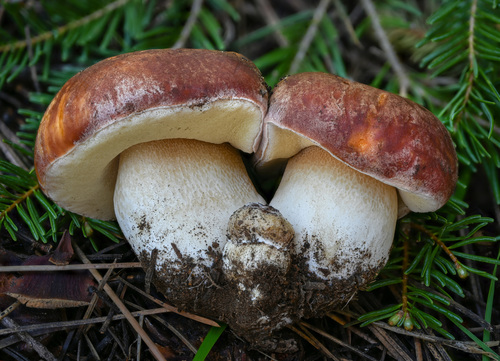
⚠ do not eatSatan's Bolete
Rubroboletus satanas
Holger Krisp · CC BY 3.0
How to tell it apart
- The yellow tubes terminate in pores that are yellowish in very young fruitbodies but soon turn orange and then red as the spores mature. — First Nature ↗
- Rubroboletus satanas is a poisonous mushroom, and particularly so if it is eaten raw. — First Nature ↗
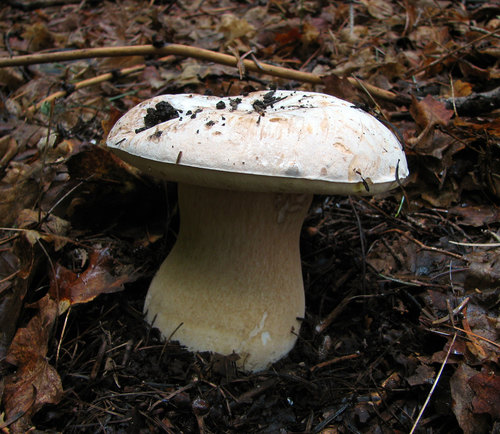
⚠ do not eatBitter Bolete
Tylopilus felleus
Holger Krisp · CC BY 3.0
How to tell it apart
- The pores underneath are white at first and become pinkish with maturity. — Wikipedia ↗
- As its common name suggests, it is extremely bitter, though not toxic as such. — Wikipedia ↗
- One specimen can foul the taste of a whole meal prepared with mushrooms. — Wikipedia ↗
Edibles people confuse with these
If you are foraging any of these, rule out the look-alikes above every time.
The notes above are an educational starting point, not a substitute for a field guide or an experienced forager. If you are not completely certain, do not eat it.