← Forage Calendar mapKnow this look-alike
Matsutake Look-alikes: Toxic Tricholomas and Amanita smithiana
These look-alikes can be deadly. Get the identification right before you eat anything. Matsutake has a spicy cinnamon-and-socks aroma and a cottony ring. The toxic look-alikes include Amanita smithiana, which causes kidney failure, and poisonous tricholomas such as the tigertop. Trust the distinctive smell and rule these out before harvesting.
The dangerous species
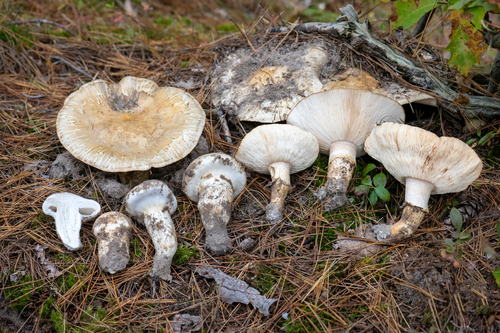
⚠ do not eatDirty Tricholoma / Tigertop
Tricholoma pardinum
Alan Rockefeller · CC BY 4.0
How to tell it apart
- Initially hemispherical and then flattening out with a broad low umbo; a whitish background patterned with concentric rings of dark brownish or grey scales that appear as elongated spots, larger towards the centre and smaller and less prominent towards the rim; 5 to 15cm across. — First Nature ↗
- Eating it causes highly unpleasant gastrointestinal symptoms of nausea, dizziness, vomiting, and diarrhea. — Wikipedia ↗
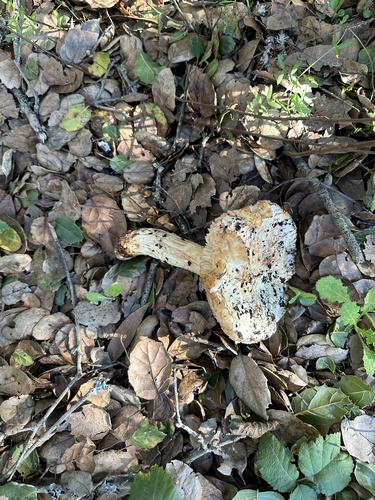
⚠ do not eatAmanita smithiana
Amanita smithiana
Dick Culbert from Gibsons, B.C., Canada · CC BY 2.0
How to tell it apart
- Amanita smithiana, also known as Smith's amanita, is a species of agaric found on soil in coniferous and broadleaved woodland in the Pacific Northwest of North America. — Wikipedia ↗
- It causes initial gastrointestinal symptoms that manifest 1 to 12 hours after eating the mushrooms, followed by acute nephritis after a delay of 2–6 days. — Wikipedia ↗
Edibles people confuse with these
If you are foraging any of these, rule out the look-alikes above every time.
The notes above are an educational starting point, not a substitute for a field guide or an experienced forager. If you are not completely certain, do not eat it.