← Forage Calendar mapKnow this look-alike
Water Hemlock and Poison Hemlock: Deadly Carrot-Family Look-alikes
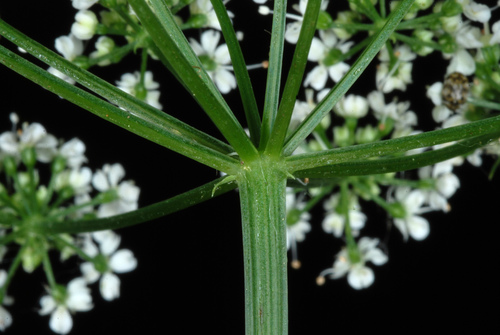
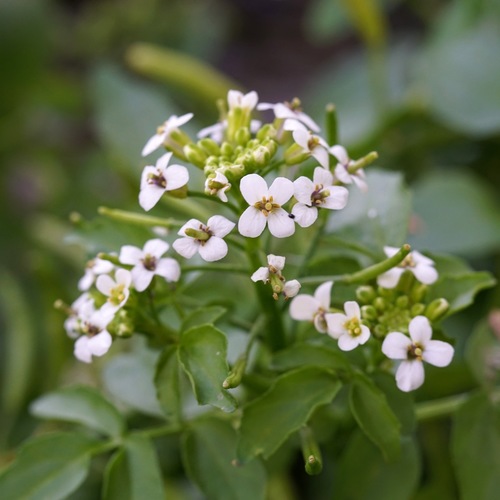
These look-alikes can be deadly. Get the identification right before you eat anything. The carrot family contains the deadliest plants in North America. Water hemlock and poison hemlock, along with giant hogweed and wild parsnip, are confused with elderflower, cow parsnip, biscuitroot, sweet cicely, and watercress. Never eat a wild umbellifer without a species-level identification.
The dangerous species
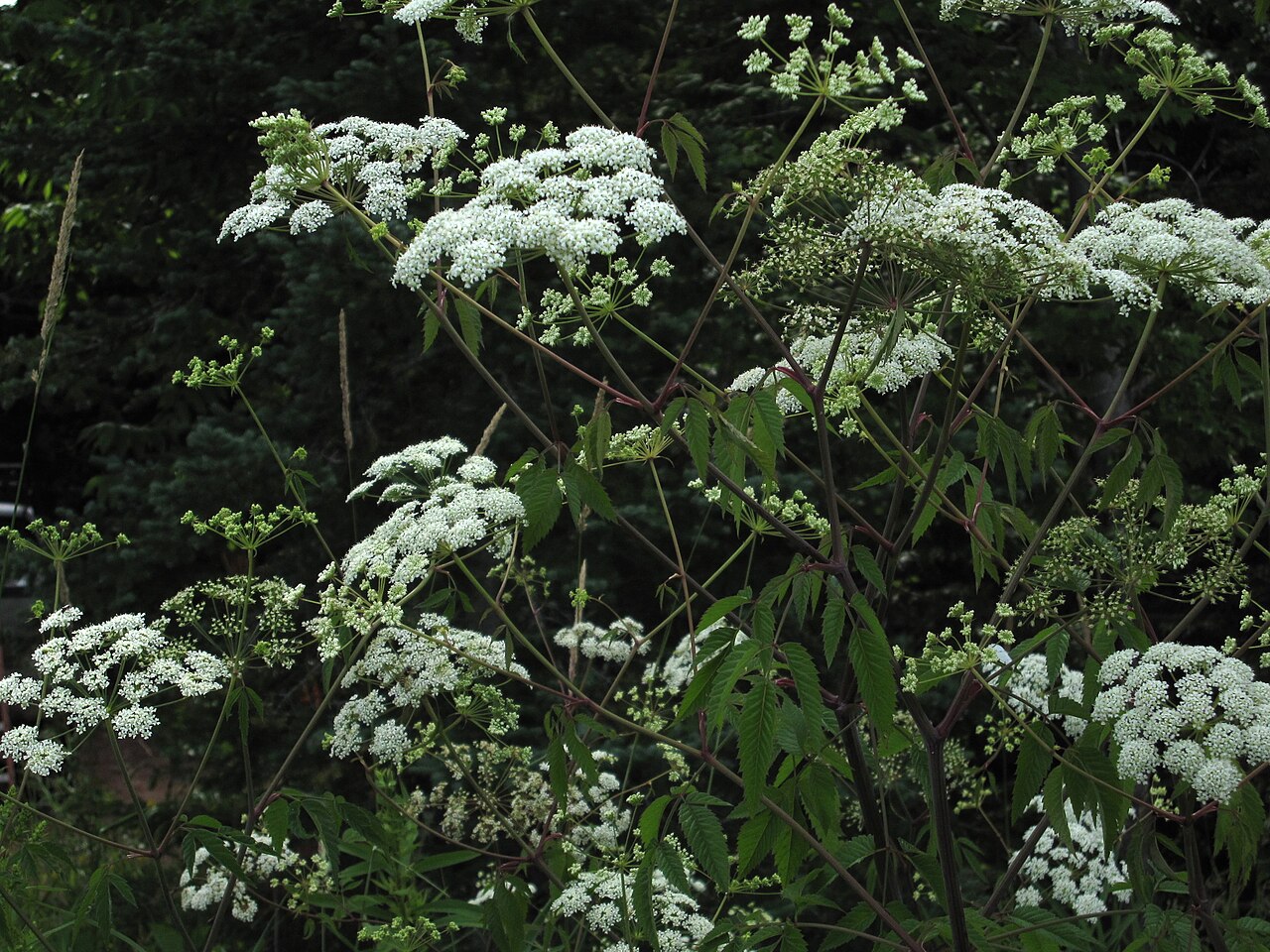
⚠ do not eatWater Hemlock
Cicuta maculata / C. douglasii
Williammehlhorn at English Wikipedia · Public domain
How to tell it apart
- The rootstocks are multichambered and contain a yellowish oily liquid which turns reddish brown on exposure to air and emits a characteristic smell of raw parsnip. — Wikipedia ↗
- It is considered to be North America's most toxic native plant. — Wikipedia ↗
- The chief poison is cicutoxin, an unsaturated aliphatic alcohol that is most concentrated in the roots. — Wikipedia ↗
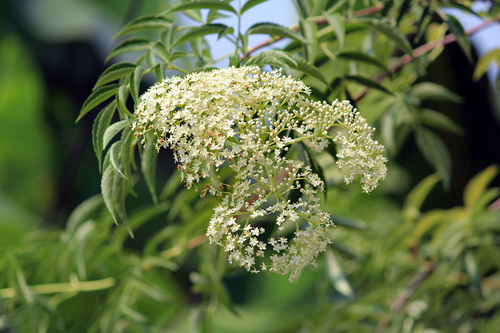
⚠ do not eatPoison Hemlock
Conium maculatum
Cbaile19 · CC0
How to tell it apart
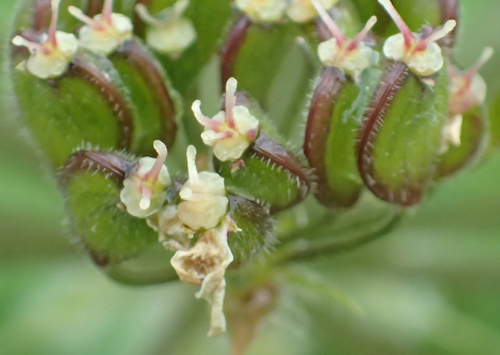
⚠ do not eatGiant Hogweed
Heracleum mantegazzianum
anastasiiamerkulova · CC BY 4.0
How to tell it apart
- The hollow, ridged stems are 3–8 cm (1–3 in) in diameter, occasionally reaching 12.5 centimetres (5 in) diameter, and can grow to more than 4 m (13 ft) high. — Wikipedia ↗
- Dark red spots on the stem each surround a single hair. — Wikipedia ↗
- A phototoxic reaction can begin as soon as 15 minutes after contact with the sap. — Wikipedia ↗
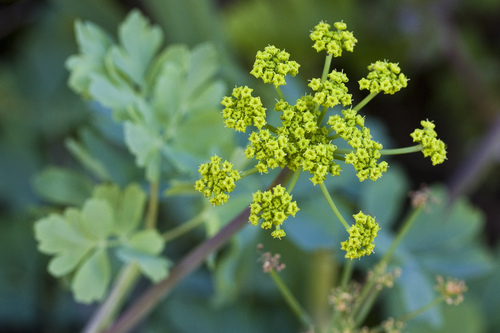
⚠ do not eatWild Parsnip
Pastinaca sativa
Элеонора Анатольевна · CC BY 4.0
How to tell it apart
Edibles people confuse with these
If you are foraging any of these, rule out the look-alikes above every time.
The notes above are an educational starting point, not a substitute for a field guide or an experienced forager. If you are not completely certain, do not eat it.